May
21

- by Dhruv Ainsley
- 0 Comments
Self-Taught Developer Readiness Calculator
Your Inputs
Enter your details to see your estimated timeline and readiness score.
Look at any job board for software developers today. You will see thousands of listings asking for a Computer Science degree. Then look at the people actually building apps, fixing bugs, and launching startups. A huge chunk of them never stepped foot in a university lecture hall. They taught themselves. The question isn't really whether you *can* be a self-taught coder. It is whether you have the grit to survive the loneliness and confusion that comes with doing it alone.
In 2026, the barrier to entry for coding has never been lower. We have AI assistants that can debug your code instantly. We have interactive platforms that feel like video games. But the barrier to *success*-getting hired and staying employed-has shifted. It is no longer about knowing syntax; it is about proving you can solve problems without holding someone's hand. If you are thinking about skipping the traditional education route, you need to know exactly what you are signing up for.
The Myth of the "Natural" Coder
We love stories of prodigies who wrote their first app at age ten. These stories create a dangerous myth: that coding is a talent you either have or you don't. This is false. Coding is a skill, much like playing the guitar or speaking Spanish. You do not need a gift; you need repetition and feedback loops.
Self-taught programmers are individuals who acquire programming skills through independent study, online resources, and practical application rather than formal academic degrees. In the modern tech landscape, this group includes everything from hobbyists building weekend projects to senior engineers at major tech firms who started by reading documentation late at night.
The biggest hurdle for self-learners is not intelligence. It is structure. When you go to a bootcamp or university, someone else decides what you learn next. When you teach yourself, you decide. And most beginners make the mistake of jumping between languages. They start with Python, get bored, switch to JavaScript, then try Rust. Without a roadmap, this leads to burnout. The key is picking one path and sticking to it until you build something real.
Your Digital Toolkit: Where to Actually Learn
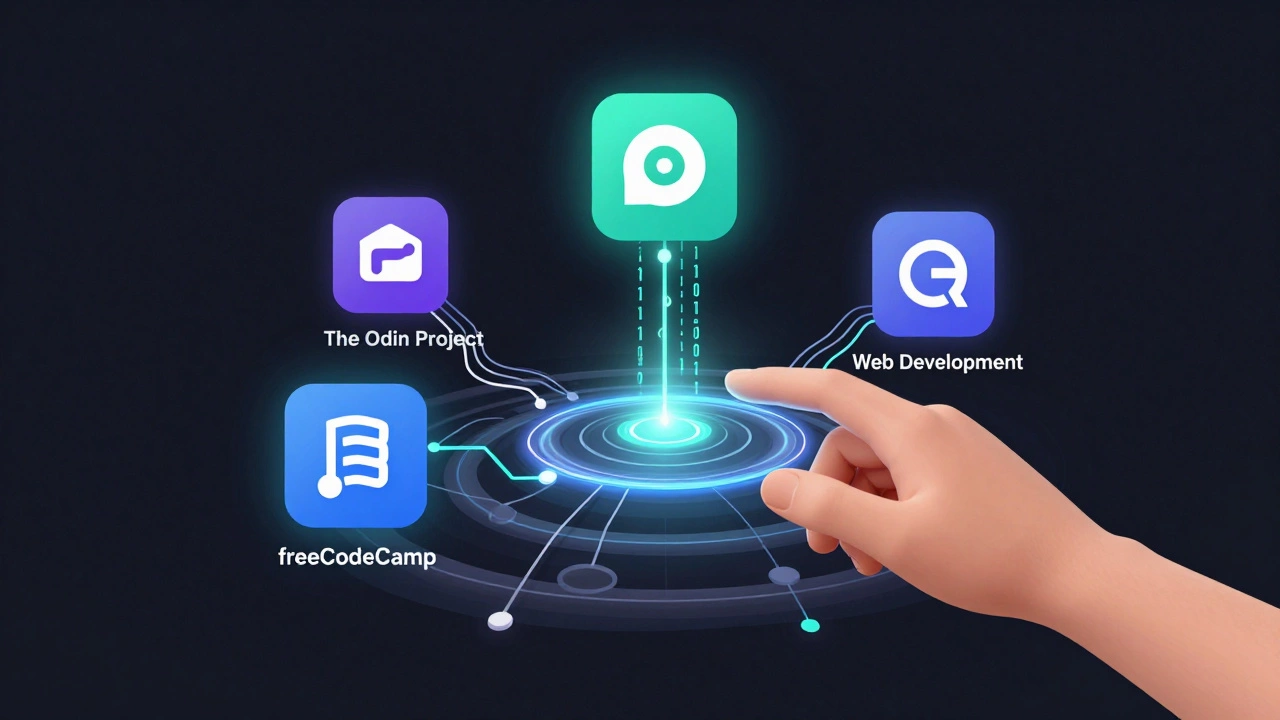
Gone are the days when you needed expensive textbooks. Today, the best coding education is often free. However, "free" does not mean "easy." It means you have to curate your own curriculum. Here is how the landscape looks right now.
| Platform | Best For | Cost | Key Strength |
|---|---|---|---|
| freeCodeCamp | Absolute Beginners | Free | Project-based certification paths |
| The Odin Project | Full-Stack Web Dev | Free | Curated, opinionated roadmap |
| LeetCode | Interview Prep | Freemium | Algorithmic problem solving |
| Udemy | Specific Technologies | Paid (Sales) | Deep dives into specific frameworks |
freeCodeCamp is a nonprofit organization that offers free coding certifications and a vast library of tutorials for web development and data science. It has helped millions of people land jobs by focusing on building real projects rather than just watching videos.
If you want to become a web developer, start with The Odin Project. It forces you to set up your local development environment, which is a painful but necessary step that many other tutorials skip. For backend logic and algorithms, LeetCode is the industry standard for practice. Remember, watching a tutorial gives you an illusion of competence. Only typing the code yourself builds actual neural pathways.
The Portfolio: Your New Degree
Employers do not care if you learned Python from a book or a professor. They care if you can use Python to save them time or make them money. Since you lack the credential of a degree, you must replace it with proof of work. This is your portfolio.
A strong portfolio does not contain three todo-list apps. It contains two or three substantial projects that solve real problems. Did you build a tool that scrapes housing prices in Melbourne and predicts trends? That is impressive. Did you clone Netflix? That is generic. Recruiters see hundreds of clones. They want to see unique ideas.
Here is a checklist for a hiring-manager-ready portfolio:
- Live Demos: Every project must be hosted online. Use services like Vercel, Netlify, or Heroku. If I cannot click a link and see it work, it does not exist.
- Clean Code: Host your source code on GitHub. Ensure your repository has a README file that explains what the project does, how to install it, and why you built it.
- Complexity: Include at least one project that involves a database, user authentication, and an external API. This shows you understand full-stack concepts.
- Bug Fixes: Write a blog post or include a section in your README about a difficult bug you encountered and how you solved it. This demonstrates problem-solving skills.
Your portfolio is not just a gallery of links. It is a narrative of your growth. Show the evolution from simple scripts to complex applications. This tells the story of a learner who persists.
Navigating the Job Market as a Self-Taught Dev
Getting the first job is the hardest part. Once you have one year of experience, nobody asks where you learned. But breaking in requires strategy. The "Easy Apply" button on LinkedIn is a black hole for self-taught candidates. You need to bypass the automated filters.
Networking is not optional; it is your primary channel. Attend local meetups. In Melbourne, groups like Melbourne Ruby User Group or general tech hackathons are goldmines. Go there, talk to people, and ask for advice, not jobs. People love to help those who show genuine curiosity.
Consider contract work or internships. Many agencies are willing to take a chance on a junior dev for a short-term contract because the risk is limited. If you perform well, they often convert you to full-time. This is a common path for self-taught developers to gain the "professional experience" line on their resume.
Also, tailor your resume. Do not list "Self-Taught" as a weakness. Frame it as "Independent Learner" with a focus on agility and resourcefulness. Highlight your projects prominently, above your education section. If you have no degree, put your projects at the top. If you have a degree in History, put your coding projects first to signal your career pivot clearly.

When Self-Study Isn't Enough
There is a point where self-study hits a wall. This usually happens around intermediate level. You know the basics, but you struggle with architecture, testing, or system design. This is known as the "Valley of Despair" in learning curves.
This is where mentorship becomes critical. You do not necessarily need a bootcamp, but you might need a paid mentor. Platforms like ADPList allow you to connect with senior engineers for free mentoring sessions. Having someone review your code and tell you, "This is bad practice because..." is worth more than ten hours of YouTube videos.
Additionally, consider contributing to open source. This exposes you to professional codebases and collaboration tools like Git workflows, pull requests, and code reviews. It mimics the real-world environment of a software team. It also adds credibility to your profile that a solo project cannot match.
The Verdict: Is It Worth It?
Yes. Absolutely. But only if you treat it like a job. If you plan to study four hours a week while working full-time, it will take years. If you dedicate twenty hours a week, consistently, you can be job-ready in six to twelve months.
The tech industry values output over pedigree. Companies like Google, Apple, and IBM have dropped degree requirements for many roles because they realized degrees are poor predictors of coding ability. What they look for is logical thinking, persistence, and the ability to learn new technologies quickly. These are traits honed by self-teaching.
You will face rejection. You will feel stupid. You will wonder if you should have just gone to university. Keep going. The community of self-taught devs is massive, supportive, and growing every day. Your journey is hard, but the reward-a career built on your own terms-is unmatched.
How long does it take to become a self-taught programmer?
It typically takes 6 to 12 months of dedicated study (15-20 hours per week) to reach a junior developer level. This timeline assumes you are building projects consistently and not just watching tutorials. Part-time learners may take 18-24 months.
Do companies hire self-taught developers?
Yes, many companies actively hire self-taught developers. Tech giants like Google, Tesla, and IBM have removed degree requirements for many engineering roles. Startups and smaller agencies often prefer self-taught devs for their resourcefulness and practical skills.
What is the best programming language for self-taught beginners?
JavaScript is widely considered the best starting point because it runs in every web browser, allowing for immediate visual feedback. Python is also excellent due to its readable syntax and versatility in data science and backend development.
Is a coding bootcamp better than self-study?
Bootcamps offer structure, networking, and accountability, which can speed up the process. However, they are expensive. Self-study is cheaper and teaches you how to learn independently, a crucial skill for long-term success. Success depends more on your discipline than the method.
Can I get a high-paying job without a CS degree?
Yes. Senior developers without degrees often earn salaries comparable to or higher than their degreed peers. Salary is determined by skill, experience, and negotiation, not educational background. Focus on mastering in-demand skills like cloud computing or AI integration.

Dhruv Ainsley
I am an education specialist with a focus on international educational systems, particularly in India. I enjoy exploring how educational practices can be improved to foster better learning environments. Writing about such topics allows me to share insights and encourage meaningful discussions. My work seeks to inspire educational reforms that prioritize inclusive and quality learning experiences.