School Curriculum Comparison: How India Stacks Up Against the World
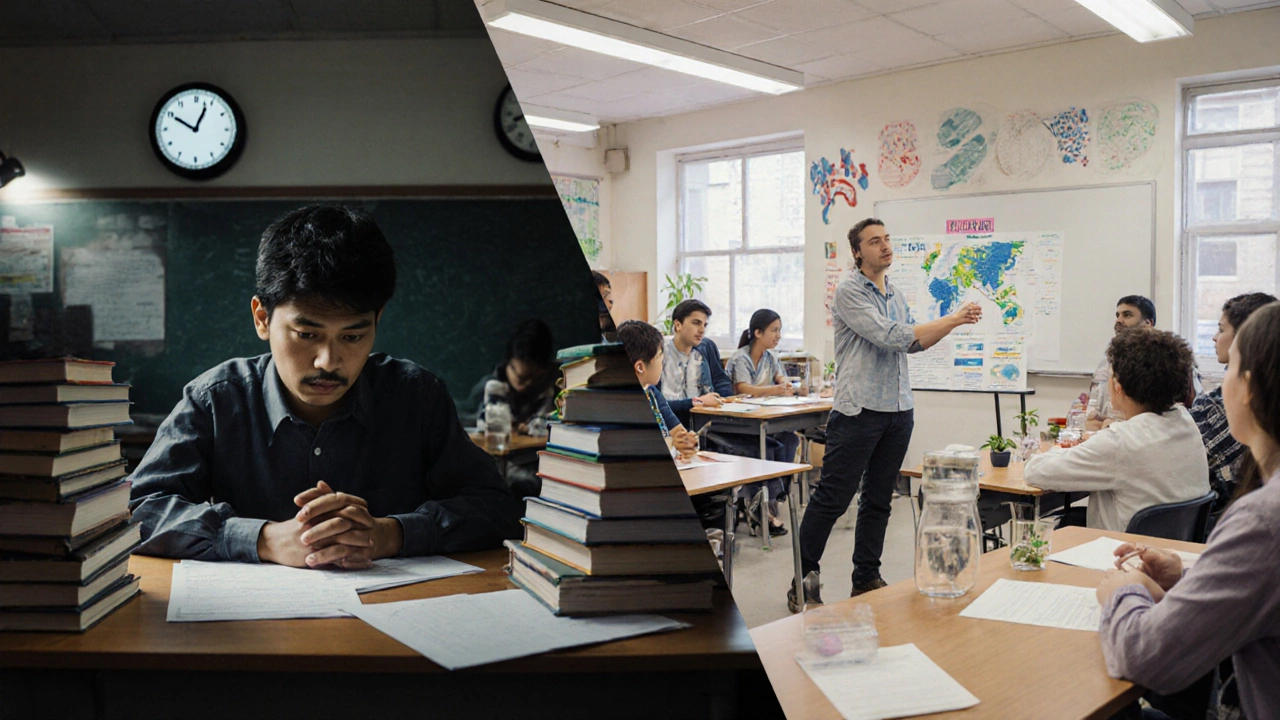
When you look at school curriculum comparison, the structured plan of what students learn in school across different countries. Also known as education syllabus, it determines not just what kids study, but how they think, solve problems, and prepare for life after school. In India, the CBSE syllabus, the national curriculum followed by most private and central schools focuses heavily on theory, memorization, and standardized testing. Compare that to Finland, where students spend less time in class but more time on project-based learning, or Singapore, where math and science are taught with deep conceptual understanding from day one. These aren’t just small differences—they shape how future engineers, doctors, and entrepreneurs are made.
Many parents in India wonder if their child’s ICSE curriculum, a more detailed, English-focused alternative to CBSE with greater emphasis on literature and critical thinking gives them an edge. The truth? It depends on the goal. ICSE students often perform better in international exams and overseas universities because their curriculum builds stronger language and analytical skills. But CBSE students dominate national competitive exams like JEE and NEET because the content aligns perfectly with those tests. Meanwhile, countries like Canada and Australia integrate life skills, emotional intelligence, and digital literacy directly into their core subjects—something India’s system still treats as extra-curricular at best.
It’s not just about what’s taught—it’s about how it’s assessed. In India, a single exam can decide a student’s entire future. In Germany, students are evaluated through continuous projects, group work, and oral presentations. In Japan, creativity and discipline are equally weighted. These differences explain why global rankings often place India high in math and science scores but low in innovation and problem-solving adaptability. The school curriculum comparison isn’t about which system is better—it’s about which one fits your child’s strengths and goals. Below, you’ll find real comparisons, expert insights, and data-backed breakdowns of how India’s education system measures up against the world—and what you can do about it.
Nov
21
- by Dhruv Ainsley
- 0 Comments
Is American Syllabus Easier Than CBSE? A Real Comparison
CBSE and American syllabi differ in structure, pressure, and goals. One isn't easier-it's just designed for different outcomes. Learn how each shapes learning and what works best for your future.