Aug
21
- by Dhruv Ainsley
- 0 Comments
eLearning Format Finder
Not sure where to start? Answer these three quick questions to get a personalized recommendation for the type of digital learning that suits you best.
Complete the profile on the left to see your personalized recommendation.
Imagine you are sitting in your living room in Melbourne, sipping coffee, while attending a live lecture from a professor at Harvard. Or maybe you are a software engineer debugging code on a laptop while taking a short module on cybersecurity during your lunch break. These aren't sci-fi scenarios; they are everyday realities for millions of people worldwide. When we ask what is an example of eLearning, the answer isn't just one thing-it's a vast ecosystem of digital tools, strategies, and experiences designed to transfer knowledge without physical presence.
eLearning, or electronic learning, refers to any educational activity delivered via electronic media. But knowing the definition is different from recognizing it in action. To truly understand eLearning, we need to look at concrete instances where technology bridges the gap between learner and content. Whether it’s a formal university degree or a quick tutorial on using a new software tool, the core mechanism remains the same: digital delivery of instruction.
Formal Academic E-Learning: The University Model
The most recognizable form of eLearning is likely the fully online university program. Think of institutions like Open University in the UK or various Australian universities that offer remote degrees. In this model, students enroll in accredited courses, attend virtual lectures, submit assignments through a Learning Management System (LMS), and take proctored exams online. This is not just watching videos; it involves structured curricula, peer collaboration forums, and direct interaction with faculty members. For a student working full-time, this allows them to earn a bachelor’s or master’s degree without commuting to campus, fitting study around their work schedule.
This type of eLearning relies heavily on robust infrastructure. The LMS acts as the central hub, hosting course materials, grading systems, and communication channels. It ensures that the academic rigor matches that of traditional face-to-face classes, maintaining accreditation standards set by higher education bodies.
Corporate Training: Upskilling the Workforce
Another massive sector of eLearning is corporate training. Companies use digital platforms to onboard new hires, train employees on compliance regulations, or upskill teams in specific technical areas. For instance, a retail chain might use a mobile-first app to train store managers on customer service protocols. The manager can complete modules on their phone during a shift change. This is often referred to as microlearning because lessons are broken down into short, digestible chunks-usually five to ten minutes long-to maximize retention and minimize time away from tasks.
In the tech industry, eLearning takes the form of continuous professional development. Developers might use platforms that offer interactive coding challenges. Instead of just reading about Python syntax, they write code in a browser-based environment, get instant feedback, and solve real-world problems. This hands-on approach is a key differentiator of modern eLearning compared to passive video watching.
Self-Paced Online Courses: The MOOC Phenomenon
Massive Open Online Courses (MOOCs) represent a distinct category of eLearning. Platforms like Coursera, edX, and FutureLearn allow anyone to enroll in courses taught by top professors from prestigious universities. You don’t necessarily need a prior qualification to start. A high school student in Australia can take a physics course from MIT, and a marketing executive can learn data science basics from Stanford.
The flexibility here is unmatched. Learners set their own pace, pausing videos when they need to think or skipping ahead if they already know the material. Many of these courses are free to audit, though certificates cost extra. This model democratizes access to high-quality education, removing geographical and financial barriers that traditionally limited who could attend elite institutions.

Synchronous vs. Asynchronous: How Delivery Matters
When identifying examples of eLearning, it’s crucial to distinguish between synchronous and asynchronous modes. Synchronous eLearning happens in real-time. Imagine a virtual classroom where a teacher shares their screen, answers questions via chat, and conducts polls. Tools like Zoom or Microsoft Teams facilitate this. It mimics the energy of a physical classroom but requires participants to be online at the same time.
Asynchronous eLearning, on the other hand, has no fixed schedule. You watch recorded lectures whenever it suits you. This is common in self-paced courses and many corporate training modules. The advantage is convenience; the disadvantage is less immediate feedback. Effective eLearning designs often blend both methods, using asynchronous content for foundational knowledge and synchronous sessions for discussion and clarification.
| Type | Primary Audience | Key Feature | Typical Duration |
|---|---|---|---|
| Online Degree Programs | University Students | Accredited credentials, structured curriculum | 1-4 Years |
| Corporate Microlearning | Employees | Short modules, mobile-friendly, job-specific | 5-15 Minutes per module |
| MOOCs | Lifelong Learners | Open enrollment, expert-led, flexible pacing | 4-8 Weeks per course |
| Virtual Live Classes | Students/Professionals | Real-time interaction, synchronous delivery | 1-2 Hours per session |
Interactive and Gamified Learning Experiences
Not all eLearning looks like a slide deck or a video. Some of the most engaging examples involve gamification. Language learning apps like Duolingo are prime examples. They turn grammar exercises into games with points, streaks, and leaderboards. The goal is to keep users coming back daily by making the process fun rather than tedious. This leverages behavioral psychology principles to enhance habit formation.
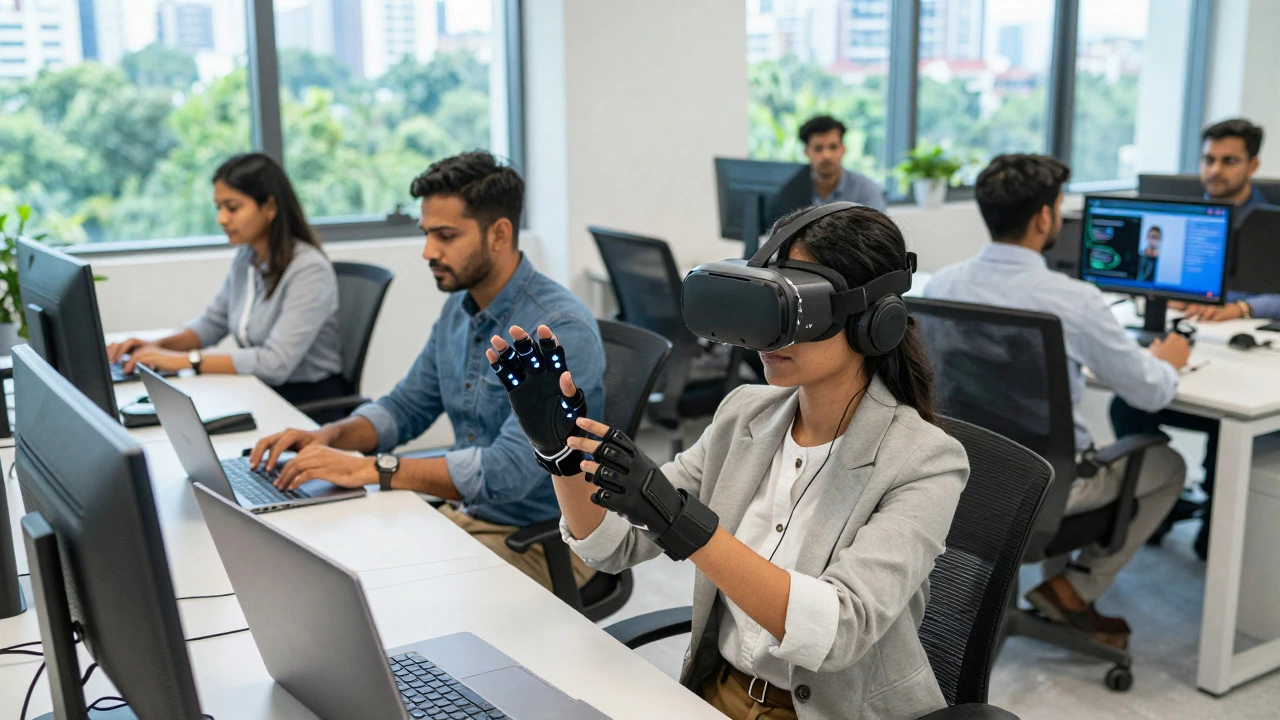
Simulations are another powerful tool. Medical students practice surgeries in virtual reality environments before touching a patient. Flight trainees use simulators to handle emergency scenarios safely. These immersive eLearning examples provide risk-free practice spaces where mistakes have low consequences but high learning value. The technology behind these simulations, including VR headsets and haptic feedback gloves, is rapidly advancing, making these experiences more accessible every year.

Why Understanding Examples Matters for Selection
Knowing what eLearning looks like helps you choose the right format for your needs. If you need a recognized credential for career advancement, an online degree or a certified professional program is the clear choice. If you want to quickly pick up a new skill for a current project, a microlearning module or a practical workshop might be better. If you’re curious about a subject just for personal growth, a free MOOC offers low-risk exploration.
The best eLearning isn't defined by the technology alone, but by how well it fits the learner's context. A busy parent might prefer short, mobile-accessible lessons. A dedicated student might thrive in a structured, cohort-based online program. Recognizing these variations allows you to navigate the digital education landscape with confidence, ensuring you invest your time in formats that actually deliver results.
Frequently Asked Questions
Is eLearning the same as online learning?
Yes, the terms are often used interchangeably. However, "eLearning" is a broader term that can include computer-based training (CBT) and instructor-led training (ILT) delivered electronically, whereas "online learning" specifically refers to internet-based education. In practice, for most users, they mean the same thing: learning via digital devices.
Can I get a job with only eLearning qualifications?
In many fields, yes. Tech roles, for example, often prioritize skills and portfolio projects over formal degrees. Certificates from reputable platforms like Coursera or LinkedIn Learning are recognized by employers. However, for regulated professions like medicine or law, traditional accreditation may still be required, though hybrid models are becoming more common.
What is the difference between synchronous and asynchronous eLearning?
Synchronous eLearning requires learners to be online at the same time as the instructor or peers, such as in a live webinar. Asynchronous eLearning allows learners to access materials at their own pace, such as pre-recorded videos or self-paced quizzes. Most effective programs combine both to balance structure with flexibility.
Are eLearning courses suitable for children?
Absolutely. There are many age-appropriate eLearning platforms for K-12 students. These often include interactive elements, parental dashboards, and curriculum-aligned content. During school closures, many schools shifted entirely to eLearning, proving its viability for younger audiences when properly designed.
How do I know if an eLearning platform is credible?
Look for partnerships with recognized universities or industry leaders. Check if the instructors have relevant professional backgrounds. Read reviews from past learners. For professional certifications, verify if the certificate is recognized by industry associations. Be wary of platforms that promise guaranteed jobs or require large upfront payments without clear refund policies.

Dhruv Ainsley
I am an education specialist with a focus on international educational systems, particularly in India. I enjoy exploring how educational practices can be improved to foster better learning environments. Writing about such topics allows me to share insights and encourage meaningful discussions. My work seeks to inspire educational reforms that prioritize inclusive and quality learning experiences.