Jun
12

- by Dhruv Ainsley
- 0 Comments
Government Job Difficulty Estimator
What is your highest qualification?
Do you have specialized skills?
Are you willing to work in remote/rural areas?
How much time can you prepare?
Analyzing...
Calculating competition ratios...
Job Title
Description goes here.
Let’s be honest: "easy" and "government job" rarely sit comfortably in the same sentence. The dream of a stable paycheck, pension benefits, and social status attracts millions of applicants every year. In countries like India, the US, or Australia, the ratio of applicants to seats can be staggering-sometimes 100:1 or even 500:1 for popular roles.
However, "difficult" doesn't mean "impossible." It usually means "highly competitive." If you shift your focus from the most famous exams to roles with lower visibility, specific eligibility criteria, or less glamorous day-to-day tasks, the odds improve dramatically. This guide breaks down which government jobs actually have the best shot at landing you an interview, based on competition ratios, educational requirements, and preparation time.
Redefining "Easy": It’s About Fit, Not Just Intelligence
Before looking at specific job titles, we need to adjust our definition of "easy." A job is easy to get if:
- The applicant pool is small: Fewer people apply because the role is misunderstood, located in a remote area, or has strict physical/educational constraints.
- The exam pattern is straightforward: Objective questions (multiple choice) are generally easier to crack than subjective essay-based exams that require months of specialized coaching.
- You meet the niche criteria: If a job requires a specific language, a technical degree, or a certain age range, you automatically eliminate 90% of the competition.
For most candidates, the "easiest" path isn’t becoming a high-ranking civil servant immediately. It’s starting in a supportive, entry-level role where the barrier to entry is lower, allowing you to gain experience while preparing for bigger leaps later.
Top Contenders for Low-Competition Government Roles
While data varies by country and region, certain categories consistently show lower rejection rates. Here are five areas where your chances are significantly higher than in mainstream administrative services.
| Job Category | Typical Eligibility | Competition Level | Preparation Time |
|---|---|---|---|
| Railway/Transport Staff | High School / Diploma | Moderate to Low | 3-6 Months |
| Postal & Courier Services | High School Graduate | Moderate | 2-4 Months |
| Defense Non-Combat Roles | Technical Degree / ITI | Low (Niche) | 6-12 Months |
| Local Body Clerk/Admin | Graduate | Low to Moderate | 3-6 Months |
| Teaching Assistant (Govt Schools) | Diploma in Education | Moderate | 6 Months |
1. Railway and Transport Department Jobs
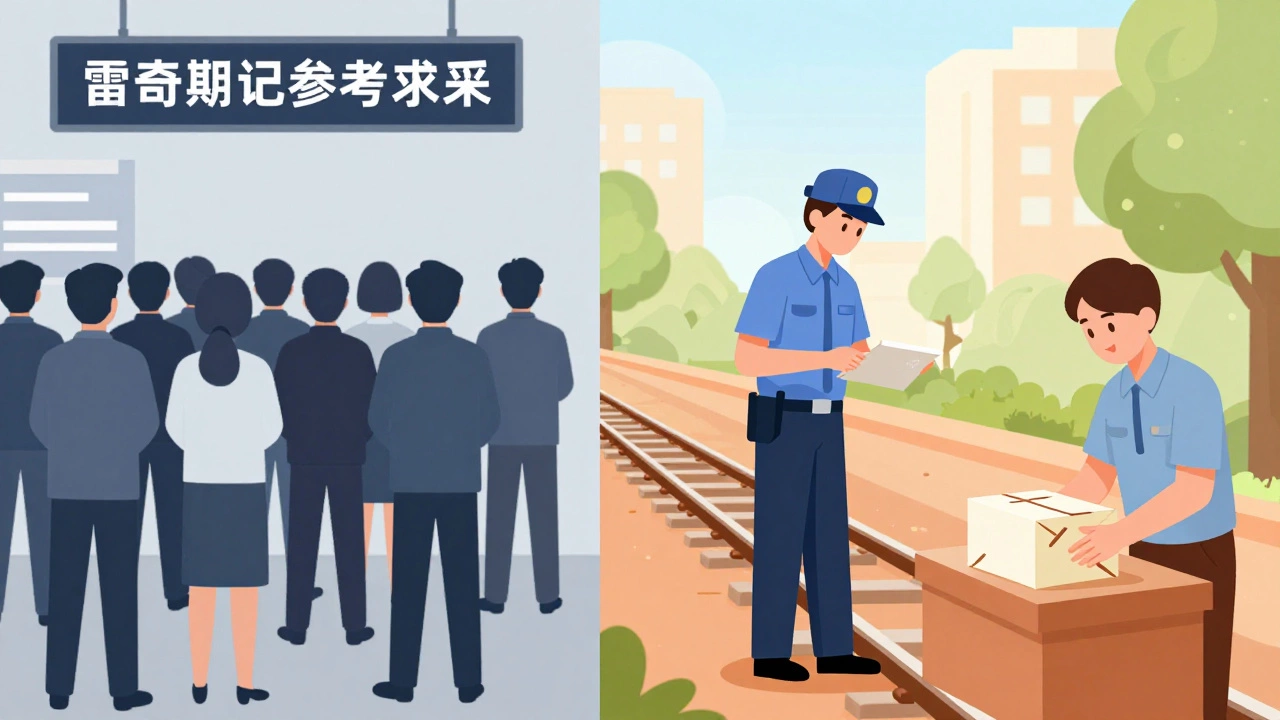
In many nations, the railway network is one of the largest employers. While top engineering posts are tough, operational roles like Commercial Apprentice, Track Maintenance Worker, or Station Master Assistant often have massive vacancies. Because these roles involve shift work, outdoor conditions, or travel, fewer urban-centric graduates apply. The exams typically test basic math, general awareness, and reasoning-skills you can sharpen with a few months of focused study.
2. Postal and Courier Services
Think of the postal service as the backbone of communication. Roles like Postman, Postal Assistant, or Sorting Inspector are frequently recruited. The barrier here is often physical fitness tests or local language proficiency rather than complex academic knowledge. If you live in a rural or semi-urban area, competition drops sharply because many candidates prefer city postings.
3. Defense Technical and Support Roles
Everyone aims for the officer ranks in the military, but the armed forces desperately need technicians. Roles such as Electrician, Plumber, Carpenter, or Computer Operator within defense establishments have much lower cut-offs. If you have an ITI (Industrial Training Institute) certificate or a vocational diploma, you’re already ahead of the crowd. These jobs offer excellent pay scales, medical benefits, and job security, often matching those of white-collar offices.
4. Local Government and Municipal Corporations
Most aspirants ignore municipal jobs because they don’t carry the same prestige as national civil services. However, roles like Tax Collector, Health Inspector, or Municipal Clerk are crucial for city functioning. Since these exams are conducted at the district or city level, the applicant pool is limited to residents of that area. This geographical restriction drastically reduces competition compared to national-level exams.
5. Teaching Assistants and Lab Technicians
Government schools and colleges often hire support staff who aren’t fully qualified teachers yet. Positions like Lab Assistant, Library Aide, or Vocational Instructor require specific subject knowledge but not necessarily a master’s degree. If you have a background in science, arts, or commerce, you can leverage that specialization to enter the system with less competition than full-fledged teaching exams.
Strategies to Boost Your Chances
Finding the right job is only half the battle. You also need to approach the application process strategically. Here’s how to tilt the odds in your favor.
- Target "Leftover" Vacancies: Many government bodies release notifications for posts that weren’t filled in previous rounds. These often have relaxed eligibility or lower cut-off marks because the urgency to fill the position is high.
- Leverage Age Relaxation: Candidates belonging to reserved categories (such as women, minorities, or disabled individuals) often get age relaxations and separate quotas. Understand your category’s specific rules to maximize your eligibility window.
- Focus on Regional Languages: If a job requires fluency in a local dialect or tribal language, learn it. This single skill can disqualify thousands of competitors who only speak the national language.
- Apply Early and Often: Don’t wait for the "perfect" job. Apply to multiple smaller organizations simultaneously. The probability theory works in your favor: more applications equal more interviews.

Pitfalls to Avoid
Even when aiming for "easier" jobs, mistakes happen. Watch out for these common traps:
- Ignoring Physical Tests: For police, railway, and defense roles, failing the physical endurance test after clearing the written exam is a wasted effort. Start training early.
- Underestimating Document Verification: Many candidates clear the exam but fail during document verification due to missing certificates or incorrect name spellings. Keep all documents organized and attested well before the final stage.
- Chasing Scams: If someone promises you a government job for a fee, run. Legitimate government recruitment never involves payment for selection. Stick to official websites and verified notification portals.
Is It Worth Starting Small?
Absolutely. Many successful civil servants started as clerks or assistants. Once you’re inside the system, you gain access to internal promotions, better study resources, and a stable income that allows you to prepare for higher exams without financial stress. The "easiest" job isn’t the highest-paying one; it’s the one that gets you through the door.
Your goal for 2026 shouldn’t just be to find a job-it should be to find a foothold. Look at your local municipality, your regional transport authority, and your neighborhood post office. These places are hiring, and they might be closer to you than you think.
What is the absolute easiest government job to get in terms of education?
Jobs requiring only a high school diploma, such as Data Entry Operator or Peon/Attendant, are generally the easiest in terms of educational barriers. However, competition can still be high due to the large number of eligible candidates. To reduce competition, look for roles that also require a specific trade certification or local language proficiency.
Do government jobs for fresh graduates have less competition?
Not necessarily. Fresh graduate roles like Junior Clerk or Assistant Engineer attract thousands of applicants annually. Instead, look for roles that require 1-2 years of experience or a specific vocational skill, as this filters out the mass of fresh graduates.
How long does it take to prepare for an easy government job?
For entry-level roles focusing on general knowledge and reasoning, 3 to 6 months of consistent study is usually sufficient. If the role involves a physical test, add another 2-3 months for fitness training. Specialized technical roles may require longer preparation depending on your current skill level.
Are remote or rural government jobs easier to get?
Yes, significantly. Many candidates prefer urban postings for lifestyle reasons. Jobs in remote districts, border areas, or rural health centers often remain vacant or have very low competition. If you are willing to relocate, your chances of selection increase dramatically.
Can I get a government job without taking an exam?
In some cases, yes. Direct recruitment happens for highly specialized roles (like senior doctors or engineers) based on interviews and past experience. Additionally, some governments hire contract workers or apprentices who can transition to permanent roles after a probation period, bypassing the initial competitive exam.

Dhruv Ainsley
I am an education specialist with a focus on international educational systems, particularly in India. I enjoy exploring how educational practices can be improved to foster better learning environments. Writing about such topics allows me to share insights and encourage meaningful discussions. My work seeks to inspire educational reforms that prioritize inclusive and quality learning experiences.