Sep
18

- by Dhruv Ainsley
- 0 Comments
Certification ROI & Recognition Finder
Not sure which certification to pursue? Select your current role and target industry to see which credentials employers value most in 2026.
You spent months studying late into the night. You passed the exam. You added the badge to your LinkedIn profile with a sense of pride. Then you sent out ten resumes and got zero callbacks. It’s a frustrating reality for many professionals: not all online certifications carry equal weight. In fact, some are viewed as little more than expensive internet trivia by hiring managers.
The question isn't just "which certificate looks cool?" It's about return on investment. Which credentials actually open doors? As we move through 2026, the landscape has shifted. The era of generic "completion badges" is fading. Employers now look for specific signals of competence. If you’re wondering where to spend your time and money, you need to understand who values what. Let’s break down which online certifications are most recognized right now, and why.
Why Employer Recognition Varies Wildly
Not all certificates are created equal because they serve different purposes. Some prove you watched videos; others prove you can do the job. The difference lies in three key factors: vendor authority, assessment rigor, and industry alignment.
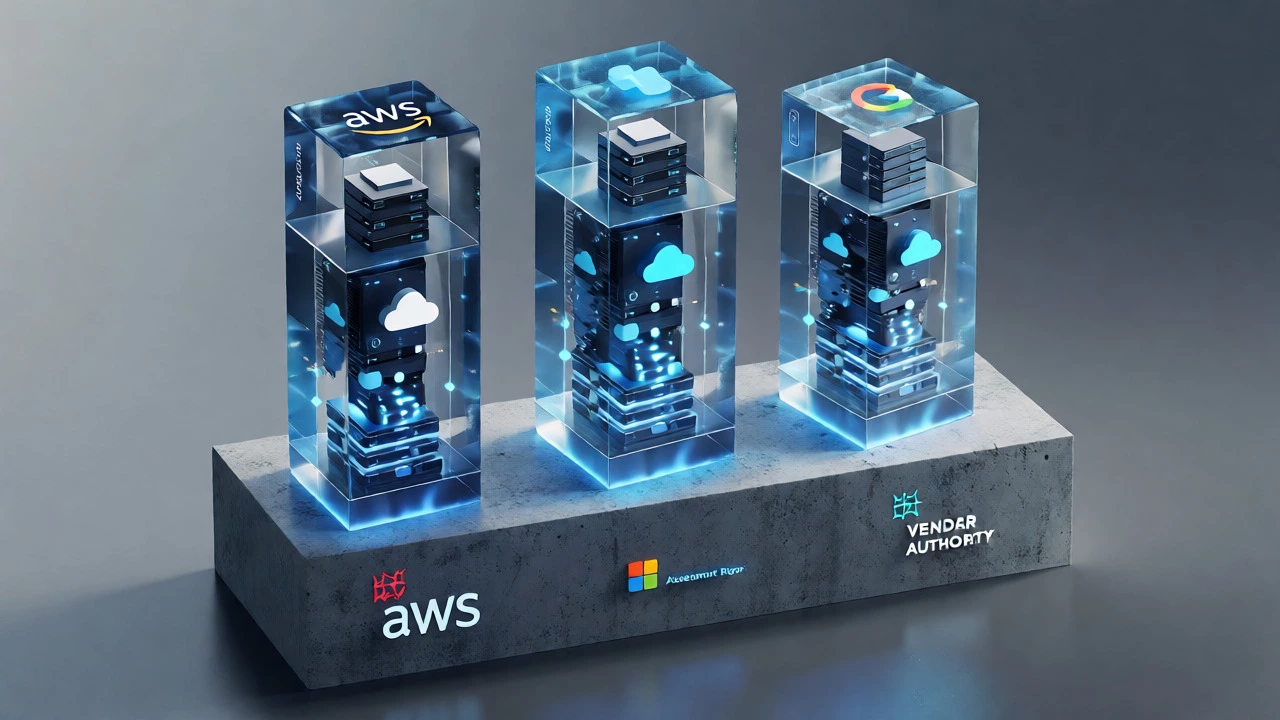
Vendor Authority is straightforward. A certificate from Google, Microsoft, or AWS carries immediate weight because these companies define the tools most businesses use. They have brand recognition that translates directly to trust. Conversely, a certificate from a lesser-known bootcamp might require you to explain its value during an interview.
Assessment Rigor matters too. Did you just click through slides? Or did you pass a proctored exam with a low pass rate? Certifications like the AWS Certified Solutions Architect or CompTIA Security+ are respected because they are hard to get. They filter out people who didn’t really learn the material.
Finally, Industry Alignment determines relevance. A PMP (Project Management Professional) certification is gold standard in construction and IT project management but less critical in creative fields. Understanding the specific demands of your target role is half the battle.
The Tech Giants: Cloud and Software Credentials
If you work in IT, software development, or data analysis, cloud certifications are arguably the most recognized assets in your portfolio. Why? Because the infrastructure of the modern web runs on them.
AWS Certifications dominate the market. Amazon Web Services holds the largest market share in cloud computing. Consequently, their certifications are ubiquitous. The AWS Certified Solutions Architect - Associate is often cited as the entry point for serious cloud careers. It proves you can design distributed systems on AWS. Recruiters know exactly what this means.
Microsoft Azure Certifications are close behind, especially in enterprise environments. Companies already using Windows Server and Active Directory often prefer Azure skills. The AZ-900 is good for basics, but the AZ-104 Administrator is where the real respect begins. It demonstrates hands-on ability to manage Azure identities, storage, and compute.
Don’t overlook Google Cloud Platform (GCP). While smaller than AWS and Azure, GCP certifications are highly regarded in data-heavy industries and startups. The Professional Data Engineer cert is tough but signals deep expertise in BigQuery and Pub/Sub.
| Certification Provider | Best For | Difficulty Level | Employer Perception |
|---|---|---|---|
| AWS | Cloud Architects, DevOps | High | Industry Standard |
| Microsoft Azure | Enterprise IT, SysAdmins | Medium-High | Strong Enterprise Value |
| Google Cloud | Data Engineers, AI Specialists | High | Niche High-Value |
| Cisco (CCNA) | Network Engineers | Medium-High | Classic Gold Standard |
Project Management: The Universal Language
Outside of pure tech, few certifications are as universally recognized as those in project management. This is because every company, regardless of industry, needs someone to keep projects on track, under budget, and within scope.
PMP (Project Management Professional) from the Project Management Institute (PMI) remains the heavyweight champion. It’s not just a test; it’s a credential requiring documented experience. Passing the PMP exam tells employers you speak the global language of project management. It’s rigorous, costs significant prep time, and commands higher salaries. According to PMI’s own salary surveys, PMP holders earn significantly more than non-certified peers.
However, PMP isn’t for everyone. It requires years of leading projects. For those earlier in their careers, the CAPM (Certified Associate in Project Management) is a solid alternative. It doesn’t require the same level of prior experience but still shows commitment to the profession.
In agile environments, look at Scrum Alliance or SAFe (Scaled Agile Framework) certifications. The Certified ScrumMaster (CSM) is widely recognized in software development. It’s easier to obtain than PMP but serves a different purpose: facilitating team collaboration rather than managing budgets and timelines.
Data Science and Analytics: The New Literacy
Data is everywhere. But proving you can handle it is harder than ever. Many online courses offer "Data Science" certificates, but only a few are taken seriously by hiring managers.
Tableau Desktop Specialist is gaining traction. Visualization is a critical skill. Being able to turn raw numbers into insights that executives can read is valuable. Tableau’s certification is practical and tests actual dashboard-building skills.
For deeper analytics, SAS Certified Professional holds strong in finance, healthcare, and government sectors. SAS is an older tool, but its stability and security make it indispensable in regulated industries. A SAS cert proves you can handle complex statistical modeling.
Python-based certifications are emerging, but be careful. Many are offered by course platforms like Coursera or edX. While learning Python is essential, a simple completion certificate from a MOOC (Massive Open Online Course) rarely gets you hired alone. However, combining a Python certificate with a GitHub portfolio of projects creates a powerful signal. The certificate backs up the code.
Marketing and Digital Skills: Proof of Performance
Digital marketing changes fast. What worked in 2023 might fail today. This volatility makes certifications tricky. Employers want proof you can drive results, not just theory.
Google Ads Certification is free and surprisingly effective. Yes, it’s free. But because Google controls the ad platform, knowing how to navigate their interface is mandatory. It’s a baseline requirement for PPC roles. Failing to have it when applying for a paid search job is a red flag.
HubSpot Inbound Marketing is another standout. HubSpot’s methodology is widely taught and used. Their certifications are well-structured and recognized in B2B marketing circles. Unlike Google Ads, which is technical, HubSpot focuses on strategy and content lifecycle.
Be wary of generic "Digital Marketing Masterclasses" from influencers. Unless the influencer has massive industry credibility (like Neil Patel or Gary Vaynerchuk), the certificate itself holds little weight. Focus on platform-specific certs (Meta Blueprint, TikTok Marketing) instead. These show you understand the current algorithms.

How to Choose the Right Certification for You
So, how do you decide? Don’t just chase trends. Follow this decision tree:
- Check Job Descriptions: Look at 10 job postings for your desired role. How many mention specific certs? If 8 out of 10 ask for AWS, get AWS.
- Assess Your Experience: Do you have the prerequisites? PMP requires hours of project leadership. AWS requires hands-on lab time. Be honest about your readiness.
- Evaluate Cost vs. Return: A $500 exam that leads to a $10k salary bump is worth it. A $2,000 bootcamp that gives you a generic certificate might not be.
- Consider Maintenance: Some certs expire. PMP requires PDUs (Professional Development Units) every three years. AWS recertifies every three years. Factor in the ongoing effort.
Remember, a certification is a supplement to your experience, not a replacement. It opens the door; your interview skills walk you through it.
The Future of Credentialing in 2026
We are seeing a shift toward micro-credentials and digital badges. Platforms like Credly allow you to share verifiable badges on social media. This transparency helps recruiters verify claims quickly. Blockchain-backed certificates are also entering the scene, ensuring tamper-proof records.
Another trend is competency-based hiring. Instead of asking "Do you have a degree?", companies ask "Can you solve this problem?" Certifications that include practical assessments (like coding challenges or case studies) are rising in value over purely multiple-choice exams.
Stay adaptable. The most recognized certification today might be obsolete in five years if the technology shifts. Continuous learning is the only permanent credential.
Are online certifications worth the cost compared to traditional degrees?
Yes, for specific career pivots or skill upgrades. A traditional degree takes years and costs tens of thousands. An online certification takes months and costs hundreds. If your goal is to switch from sales to data analysis, a targeted certification is far more efficient than a second bachelor's degree. However, for senior leadership roles, an MBA or equivalent may still hold more prestige.
Do employers check if I actually took the exam?
For major vendors like AWS, Microsoft, and Cisco, yes. These organizations provide verification links. You can generate a public URL that recruiters can click to see your status, score, and expiration date. Fake certificates are easily caught. Always ensure your provider offers third-party verification.
Which certification pays the highest salary?
Historically, IT architecture and cloud security certifications top the lists. AWS Certified Solutions Architect - Professional and CISSP (Certified Information Systems Security Professional) often correlate with six-figure salaries. PMP also commands high pay due to the responsibility involved. However, location and experience level heavily influence actual earnings.
Can I list expired certifications on my resume?
It depends. If you haven't renewed it, listing it as "Expired" is honest but less impactful. Some professionals leave off expired certs unless they are foundational knowledge. If you plan to renew soon, you can note "Recertification in progress." Never list an expired cert as active without clarification.
Is Coursera or edX better for recognized certificates?
Neither is inherently "better" for recognition because both partner with universities and companies. The value comes from the issuing institution, not the platform. A certificate from Stanford via Coursera carries Stanford's weight. A certificate from a random instructor on Udemy carries little weight. Check who issues the credential, not just where you buy it.

Dhruv Ainsley
I am an education specialist with a focus on international educational systems, particularly in India. I enjoy exploring how educational practices can be improved to foster better learning environments. Writing about such topics allows me to share insights and encourage meaningful discussions. My work seeks to inspire educational reforms that prioritize inclusive and quality learning experiences.