Oct
9

- by Dhruv Ainsley
- 0 Comments
Free Learning Platform Finder
Answer three quick questions to find the platform that fits your learning style and goals.
Why this recommendation?
You want to learn a new skill without burning a hole in your wallet. That is totally fair. The internet is flooded with "premium" subscriptions that promise the world but often deliver little more than a paywall. Here is the truth: you can get a university-level education, master coding, or pick up a language for zero dollars if you know where to look and how to navigate the fine print.
But "free" is a tricky word in the e-learning world. Some platforms are truly free. Others offer a "free audit" that hides graded assignments behind a credit card request. And some are free only because they are ad-supported or rely on donations. This guide cuts through the noise. We will look at which online learning platforms are genuinely worth your time in 2026, what you actually get for free, and which ones might surprise you with hidden costs.
Defining "Free": Audit vs. Full Access
Before we rank anything, you need to understand the business models. Most major platforms use a freemium model. This means basic content is free, but certification or advanced features cost money.
- The Audit Model: Platforms like Coursera and edX let you watch videos and read materials for free. You usually miss out on graded quizzes, peer reviews, and the final certificate. For pure knowledge acquisition, this is often enough.
- The Ad-Supported Model: Sites like Khan Academy are completely free because they are non-profits or supported by ads. You get full access to all exercises and tracking tools.
- The Open Source Model: Platforms like MIT OpenCourseWare provide raw course materials (syllabi, lecture notes, exams) without any interactive platform or instructor support.
Your choice depends on your goal. Do you just want to know how Python works? Audit mode is fine. Do you need proof of completion for a resume? You might have to pay, or find a platform that offers free certificates via financial aid.
Khan Academy: The Gold Standard for Fundamentals
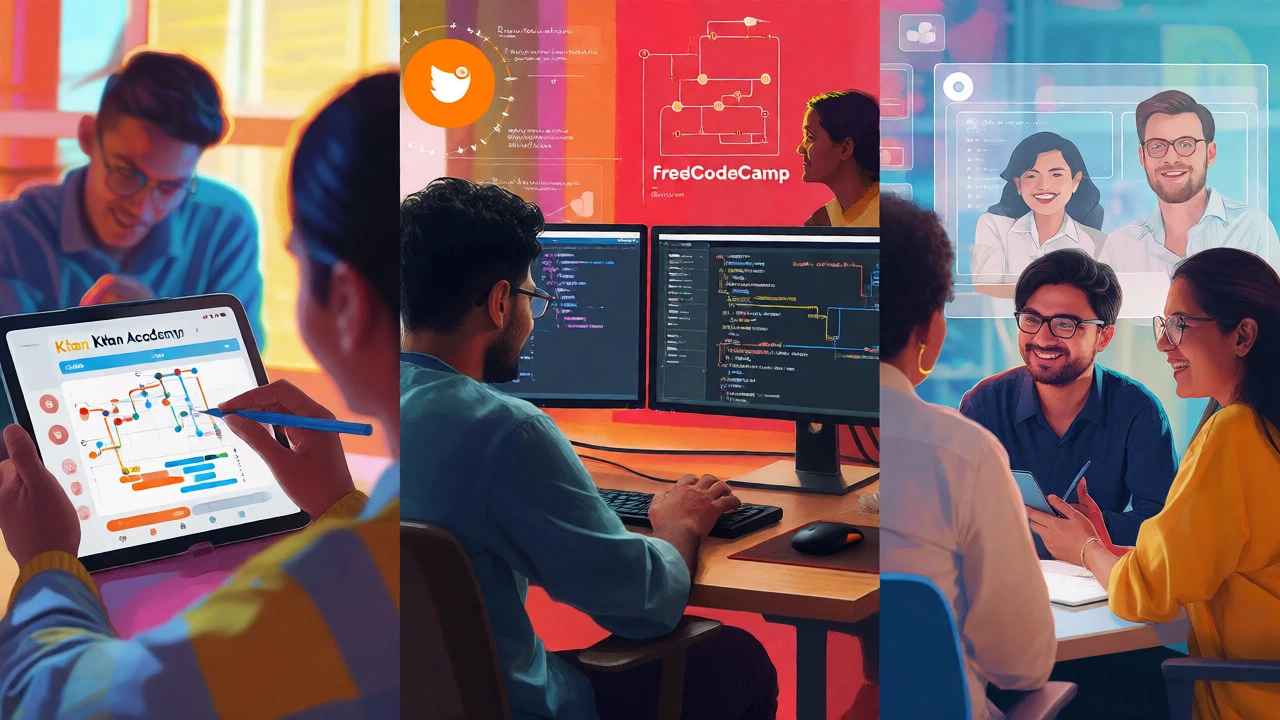
If you are starting from scratch, Khan Academy is arguably the most generous free resource available today. Founded by Sal Khan, it started as a way to help his cousins with math. Now, it covers everything from early childhood reading to advanced calculus, biology, and computer programming.
What makes it different? It is not just video lectures. It has a robust exercise system. If you get a question wrong, it gives you immediate feedback and hints. This active recall method is far more effective than passive watching. Plus, there are no ads and no upsells. You never hit a paywall.
Is it perfect? Not for everyone. If you are an adult professional looking for niche industry trends, Khan Academy might feel too academic or basic. But for building a strong foundation in STEM subjects, nothing beats it. It is also fully localized, supporting dozens of languages, which is huge for global learners.
Coursera and edX: University Powerhouses
These two giants partner with top universities like Stanford, Yale, and Harvard. The catch? They push hard for paid certificates. However, their free options are substantial.
On Coursera, you can often "audit" courses. Look closely during checkout; sometimes the "Audit" button is small or tucked away under a dropdown menu labeled "Full Course, No Certificate." Once in, you can watch all lectures. The downside is that many courses now lock quizzes behind the paywall. Still, for theoretical understanding, it is excellent.
edX operates similarly but has been shifting its model recently. While many courses still allow free auditing, the platform increasingly restricts access to certain interactive elements. However, edX shines in its variety of STEM and humanities courses. If you are interested in something like "Introduction to Psychology" from Harvard, you can watch the entire series for free.
| Platform | Primary Focus | Free Access Level | Certificate Cost | Best For |
|---|---|---|---|---|
| Khan Academy | K-12 & Early College Basics | 100% Free (No Ads) | N/A | Foundations, Math, Science |
| Coursera | University Courses | Audit (Videos Only) | $49 - $99 USD | Professional Skills, Theory |
| edX | University Courses | Audit (Limited Interactivity) | $50 - $300 USD | Academic Depth, STEM |
| Alison | Vocational & Soft Skills | Free (Ad-Supported) | $25 - $50 USD | Quick Certificates, Career Switches |
| MIT OpenCourseWare | Raw Academic Materials | 100% Free (Static Content) | N/A | Self-Discipline, Deep Research |

Alison: Vocational Training Without the Tuition
Not everyone wants a university degree. Sometimes you need practical skills fast. Maybe you want to learn digital marketing, project management, or bookkeeping. Alison specializes in these vocational and soft-skill areas.
Alison is free to take. You create an account, choose a course, and start learning. The platform is ad-supported, so expect some interruptions. The real value here is the sheer volume of short, targeted courses. You can finish a "Diploma in Project Management" in a few weeks.
Here is the kicker: while learning is free, getting a physical or verified digital certificate costs money. But do you always need a certificate? If you are using the knowledge to build a portfolio or improve job performance, you can skip the fee. Just be aware that Alison’s interface can feel cluttered compared to sleeker competitors.
FutureLearn: The UK’s Hidden Gem
Based in London, FutureLearn partners with UK universities and cultural institutions like the British Museum. Their model is slightly different. They often run courses in fixed cohorts, meaning you join a group of students who start and finish together.
This creates a sense of community. You can discuss topics in forums with peers worldwide. Many FutureLearn courses are free to access for the duration of the course plus a few weeks after. After that, you lose access unless you upgrade. This "time-limited free" model is great for motivation. It forces you to keep up. If you fall behind, you might miss out on the discussion phase, which is half the fun.
It is particularly strong in arts, history, and social sciences. If you love storytelling and context-driven learning, FutureLearn feels less like a textbook and more like a guided tour.
Codecademy and freeCodeCamp: For the Aspiring Developer
Coding bootcamps cost thousands. But you can learn to code for free. Two names dominate this space: freeCodeCamp and Codecademy.
freeCodeCamp is a non-profit. It is completely free, open-source, and community-driven. There are no ads, no upsells, and no hidden fees. You work through interactive coding challenges directly in your browser. Upon completion, you earn certifications that are respected in the tech industry because they require building actual projects. The curriculum is rigorous. It takes hundreds of hours to complete. But if you stick with it, you can land a junior developer role.
Codecademy uses a freemium model. The basic interactive lessons for HTML, CSS, and JavaScript are free. However, the "Pro" version, which includes career paths, projects, and quizzes, requires a subscription. For beginners, the free tier is excellent for testing the waters. But if you want to go deep into frameworks like React or Node.js, you will likely hit a paywall quickly.
How to Choose the Right Platform for You
With so many options, decision paralysis is real. Use this simple heuristic to narrow down your choices:
- Assess Your Goal: Are you learning for fun, for a career change, or for personal enrichment?
- Fun/Curiosity: Try Coursera audits or YouTube channels linked to educational institutions.
- Career Change (Tech): Go with freeCodeCamp. It builds a portfolio.
- Career Change (Business): Try Alison or LinkedIn Learning (if you have a library card that grants access).
- Academic Foundation: Stick with Khan Academy or MIT OpenCourseWare.
- Check the "Hidden" Costs: Always click "Enroll" before you commit. See if the quiz buttons are greyed out. See if the forum is locked. A "free" course that doesn't let you test your knowledge is half-useful.
- Consider Your Time Commitment: Self-paced platforms like edX let you go slow. Cohort-based platforms like FutureLearn require weekly attention. Pick one that fits your schedule.
Don't forget local resources. In Australia, many public libraries offer free access to premium platforms like LinkedIn Learning or Gale Courses with just a library card. Check your local council's website. You might already have a premium subscription sitting unused.
Pitfalls to Avoid When Learning for Free
Free learning comes with risks. The biggest one is lack of accountability. Without a deadline or a grade, it is easy to quit. Here is how to stay on track:
- Set Micro-Deadlines: Don't say "I'll finish this month." Say "I'll finish Module 1 by Friday."
- Join Community Groups: Reddit has subreddits for almost every course. Discord servers for freeCodeCamp are very active. Accountability partners make a huge difference.
- Beware of Outdated Content: Tech moves fast. A coding course from 2018 might teach deprecated syntax. Always check the last updated date. If a course hasn't been touched in three years, be skeptical.
- Don't Hoard Courses: Enrolling in ten free courses and finishing none is common. Pick one. Finish it. Then move on.
Another trap is the "certificate obsession." Employers care about skills, not just pieces of paper. Can you show them a GitHub repository? Did you write a blog post about what you learned? Those often weigh more than a generic certificate from an unknown provider.
Final Verdict: Which is Best?
There is no single "best" platform because your needs vary. However, if forced to pick a general winner for 2026, Khan Academy wins for accessibility and true freedom. It is clean, comprehensive, and truly free.
For career-focused adults, freeCodeCamp is unbeatable in tech. For broader professional development, Coursera's audit feature provides the highest quality instruction, even if you skip the certificate.
Start today. Pick one topic. Sign up. Watch the first video. The barrier to entry is lower than ever. The only cost is your time.
Are certificates from free online courses valuable?
It depends on the employer and the field. In tech, portfolios and demonstrated skills matter more than certificates. In regulated industries like healthcare or law, accredited certificates are crucial. Generally, a certificate from a well-known university (via Coursera or edX) carries more weight than one from a lesser-known platform, even if you audited the course for free.
Can I really learn coding for free?
Yes. Platforms like freeCodeCamp and The Odin Project provide comprehensive, structured curricula that cover front-end and back-end development. Many developers have landed jobs solely through self-study on these platforms. The key is consistency and building real projects to showcase your abilities.
What is the difference between auditing and enrolling?
Auditing typically allows you to view course videos and read materials for free. Enrolling usually involves paying a fee to access graded assignments, peer reviews, exams, and a verified certificate of completion. On some platforms, auditing may also exclude access to discussion forums.
Do I need a high-speed internet connection?
Most modern platforms stream video content, so a stable broadband connection is recommended. However, many platforms, including Coursera and Khan Academy, offer offline downloads for mobile apps. This allows you to download lessons when you have Wi-Fi and watch them later without using data.
Are these platforms suitable for children?
Khan Academy Kids and Khan Academy itself are excellent for school-aged children. Coursera and edX are generally designed for adults or advanced high school students due to the academic rigor and reading levels required. Always check the age recommendations listed on specific course pages.

Dhruv Ainsley
I am an education specialist with a focus on international educational systems, particularly in India. I enjoy exploring how educational practices can be improved to foster better learning environments. Writing about such topics allows me to share insights and encourage meaningful discussions. My work seeks to inspire educational reforms that prioritize inclusive and quality learning experiences.