Mar
6
- by Dhruv Ainsley
- 0 Comments
IIT JEE Preparation Timeline Calculator
Calculate Your Preparation Timeline
Find your personalized preparation timeline based on your current class and knowledge level
Your Recommended Timeline
Key Insight: Quality of study matters more than quantity. The article emphasizes that focused 5-hour study sessions outperform 8 hours of distracted studying.
This calculator uses data from the article showing: 18-24 months is the sweet spot for serious preparation. Starting in Class 11 typically gives the best results with 8-10 months for learning, 6-8 for revision, and 3-4 for mocks.
There’s no magic number when it comes to preparing for IIT JEE. Some students crack it in 18 months. Others spend three years and still struggle. The real question isn’t how long you study-it’s how smart you study.
What Does It Actually Take to Crack IIT JEE?
IIT JEE isn’t about memorizing formulas. It’s about solving unfamiliar problems under pressure. The exam tests your ability to think through complex physics, chemistry, and math questions you’ve never seen before. That’s why simply spending more hours doesn’t guarantee success. A student who studies 8 hours a day with scattered focus will fall behind someone who studies 4 focused hours with a clear plan.
The average successful candidate spends between 18 and 24 months preparing seriously. That doesn’t mean starting in Class 9. Most top performers begin serious prep in Class 11, after they’ve built a strong foundation in Class 10. But even that timeline can vary. Some start in Class 10 and finish early. Others join coaching in Class 12 and still make it-though they’re usually exceptional learners.
Why 18-24 Months Is the Sweet Spot
Why not two years? Because IIT JEE covers Class 11 and 12 syllabus in depth, plus requires problem-solving skills beyond textbooks. In Class 11, you’re learning new concepts like rotational motion, thermodynamics, and organic reaction mechanisms. In Class 12, you’re tackling electrostatics, integration, and coordination compounds. You need time to absorb, practice, and revisit each topic multiple times.
Most coaching institutes structure their programs around 20-22 months. That’s not arbitrary. It gives students:
- 8-10 months to learn the full syllabus
- 6-8 months for revision and practice tests
- 3-4 months for mock exams and final tuning
Skipping any of these phases leads to gaps. I’ve seen students who rushed through Class 11 and then panicked in Class 12. They knew the theory but couldn’t solve a JEE-level problem because they never practiced enough under timed conditions.
Can You Do It in 12 Months?
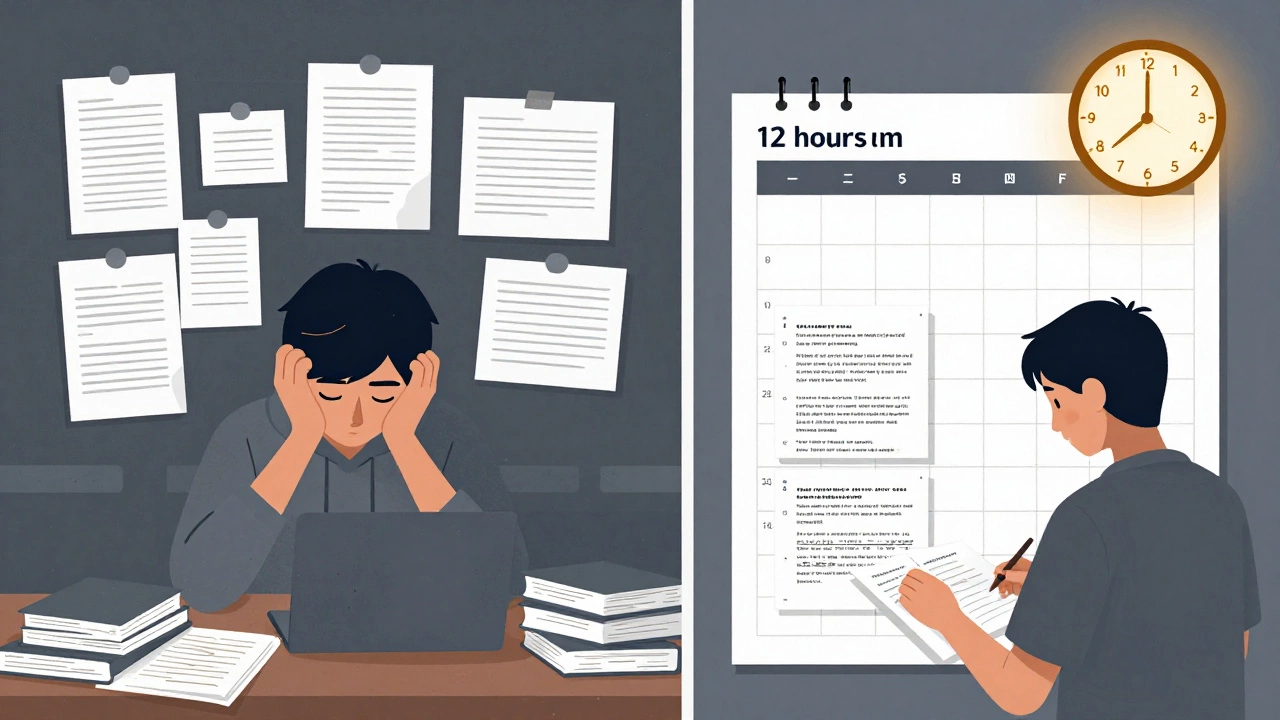
Yes-but only if you’re already ahead of the curve. If you aced your Class 10 board exams with a solid grasp of math and science fundamentals, and you’re willing to study 10-12 hours a day with zero distractions, it’s possible. But this path is risky.
Here’s what you’d need:
- A complete understanding of Class 9 and 10 science and math topics (most students don’t have this)
- Access to high-quality study material (not just coaching notes)
- Regular mock tests with detailed analysis
- Strong mentorship to correct mistakes early
Only about 5-7% of students who try to prep in 12 months crack the top 1000 ranks. The rest burn out or miss key topics.
What About Starting in Class 12?
Starting in Class 12 is like showing up to a marathon without training. It’s not impossible, but you’re already behind. Students who start here usually have one thing in common: they’ve been preparing in the background.
For example:
- They solved JEE-style problems in Class 10
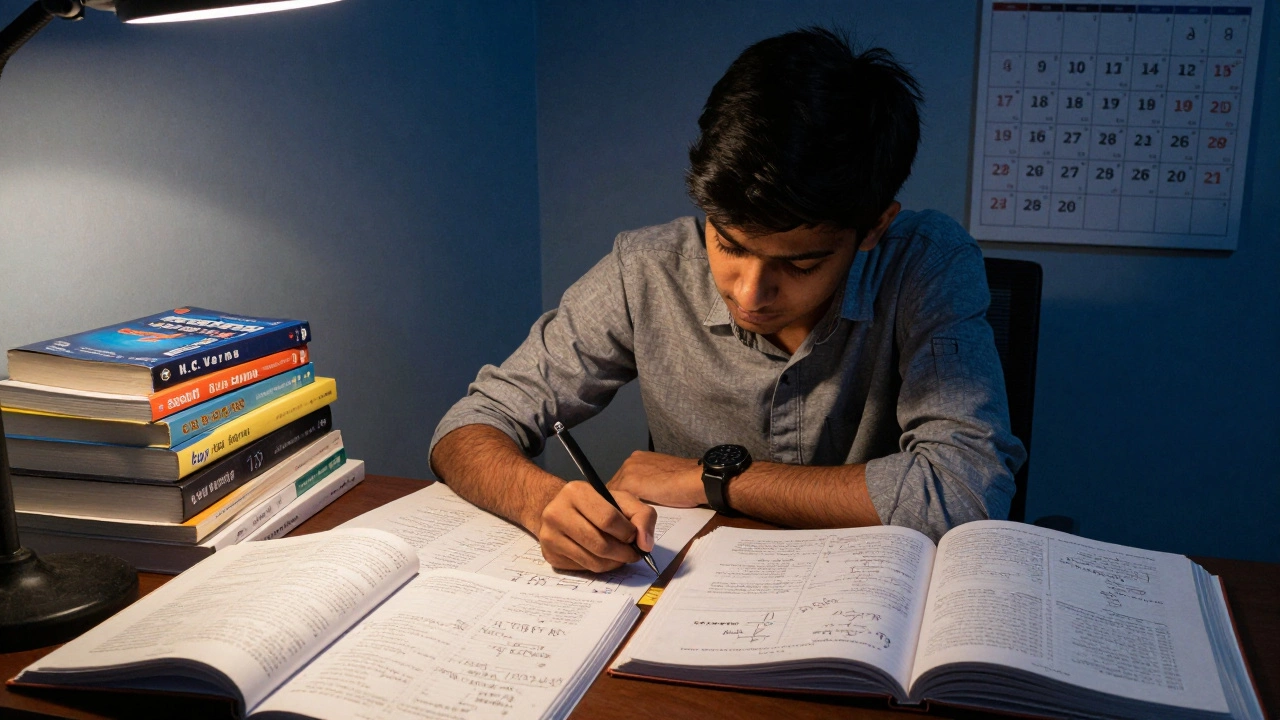
- They read advanced books like H.C. Verma or R.D. Sharma without being forced
- They’ve taken online quizzes and participated in Olympiads
If you’re starting from scratch in Class 12, you’ll need to cover two years of syllabus in eight months. That means studying 14-16 hours a day, skipping holidays, and sacrificing sleep. Most students can’t sustain that. And even if they do, they often miss the depth needed for the top ranks.
The Hidden Factor: Quality Over Quantity
Time spent isn’t the same as time well spent. I’ve seen students who studied 10 hours a day for two years but scored below 150/300. Why? They never analyzed their mistakes. They kept solving the same types of problems over and over.
Here’s what actually works:
- After every test, review every wrong answer. Not just ‘I got it wrong’-but why you got it wrong.
- Keep a mistake journal. Write down the concept, the trap, and how to avoid it next time.
- Revisit topics every 3-4 weeks. Spaced repetition beats cramming.
- Solve past 10 years of JEE Main and Advanced papers. Not just once-three times.
One student I know cleared JEE Advanced in 18 months. He studied 5 hours a day, took two mock tests a week, and spent 30 minutes every night writing down what he learned. He didn’t have the best coaching. He just had a system.
When Should You Start?
There’s no single answer. But here’s a simple guideline:
- Class 9-10: Build fundamentals. Focus on math, physics, and chemistry basics. Don’t rush into JEE material. Master your school syllabus.
- Class 11: Start serious prep. Join a good coaching program. Stick to one reliable set of books. Begin weekly mock tests.
- Class 12: Revise, practice, and refine. Focus on speed, accuracy, and exam strategy. Take full-length mocks every week.
If you’re already in Class 12 and haven’t started, don’t panic. But don’t fool yourself either. You have 8-10 months. That’s enough if you’re disciplined. But you’ll need to drop everything else-social media, part-time jobs, unnecessary hobbies.
What If You’re Not in India?
Many students outside India prepare for IIT JEE. They’re often NRI students or international school students. The syllabus is the same, but resources are harder to find. Online platforms like Physics Wallah, Unacademy, and Vedantu have English-medium courses. You can access past papers and video lectures easily.
The challenge? Lack of peer pressure. In India, students study in groups, compete in mock test rankings, and push each other. Overseas, you’re on your own. That means you need even more discipline. Set a strict daily schedule. Track your progress. Join online study groups.
Final Reality Check
Let’s be honest: IIT JEE isn’t just about hard work. It’s about consistency, strategy, and mental toughness. The top 1000 rankers aren’t geniuses. They’re the ones who showed up every day, reviewed their mistakes, and didn’t quit when things got hard.
So how long does it take? For most students: 18-24 months of focused, smart preparation. If you start in Class 11, you’re on the right track. If you start later, you’ll need to work harder and smarter-not just longer.
There’s no shortcut. But there is a path. And it starts with one question: Are you ready to be consistent for two years?
Can I prepare for IIT JEE without coaching?
Yes, but it’s rare. Self-study works only if you have exceptional discipline, access to high-quality resources (like NCERT, previous years’ papers, and video lectures), and the ability to self-assess. Most students who succeed without coaching have been preparing since Class 9 or 10 and already have strong fundamentals. Without a structured plan, it’s easy to miss key topics or waste time on low-yield areas.
Is Class 11 more important than Class 12 for IIT JEE?
Class 11 is more critical because it introduces 60% of the core concepts tested in JEE Advanced-like kinematics, thermodynamics, organic chemistry mechanisms, and calculus. Class 12 builds on this, but if you don’t have a solid foundation from Class 11, you’ll struggle to keep up. Many students fail not because of Class 12, but because they didn’t master Class 11 topics deeply enough.
How many hours should I study daily for IIT JEE?
Focus on quality, not quantity. A student who studies 5 focused hours with revision, practice, and error analysis will outperform someone who studies 8 distracted hours. For Class 11, aim for 6-7 hours daily. In Class 12, increase to 7-8 hours if you’re taking mocks. But never sacrifice sleep or health for study time. Burnout is the biggest reason students fail.
Which books should I use for IIT JEE preparation?
Start with NCERT textbooks for chemistry and physics-they’re the foundation. For math, use R.D. Sharma and then move to Cengage or Arihant. For physics, H.C. Verma is essential for concept building, and I.E. Irodov is for advanced problem-solving. Don’t collect 20 books. Master 3-4. Most toppers use fewer than five books thoroughly.
Do I need to solve previous years’ papers?
Yes, and not just once. Solve papers from the last 15 years at least three times. The first time is for understanding patterns. The second time is to improve speed. The third time is to eliminate mistakes. JEE questions repeat concepts-even if the numbers change. You’ll see the same traps over and over. Recognizing them is half the battle.
There’s no substitute for consistent effort. But with the right approach, two years of focused preparation is enough. Start now. Stay steady. And don’t compare yourself to others. Your journey is yours alone.

Dhruv Ainsley
I am an education specialist with a focus on international educational systems, particularly in India. I enjoy exploring how educational practices can be improved to foster better learning environments. Writing about such topics allows me to share insights and encourage meaningful discussions. My work seeks to inspire educational reforms that prioritize inclusive and quality learning experiences.