Jun
23

- by Dhruv Ainsley
- 0 Comments
Coding Certification Cost & ROI Calculator
1. Select Certification Type
2. Hidden Costs & Time
3. Salary & Opportunity Cost
Estimates are based on average market data from the article.
Picture this: You’ve decided to switch careers or boost your current role by learning to code. You open a browser tab, type in "best coding certification," and immediately get hit with a wall of prices. Some say $50. Others demand $15,000. It’s confusing, intimidating, and frankly, it feels like a trap. Is there a way to get certified without going into debt? The short answer is yes. But the long answer depends entirely on what kind of credential you need and how much time you have.
In 2026, the landscape of coding certification is a formal credential that validates technical skills in programming languages or software development frameworks has shifted dramatically. We are no longer just looking at university degrees. Employers increasingly value practical proof of skill over traditional diplomas. This shift means you have options ranging from completely free self-paced modules to expensive bootcamps with job guarantees. Understanding the cost breakdown is the first step to making a smart financial decision about your education.
The Spectrum of Costs: From Free to Premium
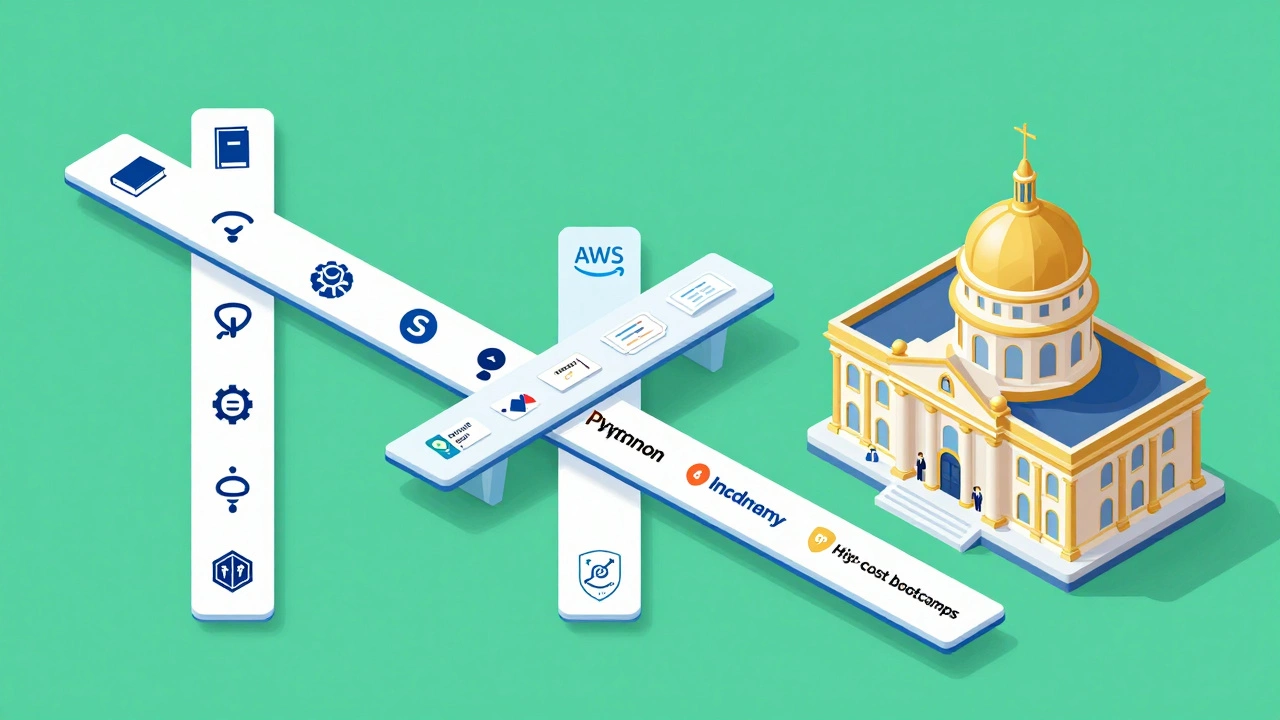
When we talk about the cost of getting certified, we aren't talking about one single number. The price tag varies wildly based on the provider, the depth of the curriculum, and whether you get human support. Let’s break down the three main tiers you’ll encounter in the market today.
Tier 1: The Free-to-Low Cost Route ($0 - $100)
You can absolutely learn to code for free. Platforms like freeCodeCamp is a non-profit organization offering free coding certifications in web development, data visualization, and more provide comprehensive curricula that culminate in certificates. Similarly, Microsoft Learn offers free paths for Azure fundamentals. However, there is a catch. While the content is free, these certificates often carry less weight with hiring managers who prefer credentials from accredited institutions or well-known commercial platforms. You are paying with your time and discipline instead of money.
Tier 2: The Mid-Range Professional Certifications ($100 - $800)
This is where most working professionals land. Vendor-specific certifications fall here. For example, if you want to prove you know Python for data science, you might look at the Python Institute PCAP is an entry-level professional certification for Python programmers costing approximately $300. Cloud providers like AWS, Google Cloud, and Microsoft Azure charge exam fees typically between $150 and $300 per attempt. These are respected because they test specific, employable skills against industry standards. They don’t teach you everything from scratch; they validate what you already know or have learned through separate study materials.
Tier 3: The Comprehensive Bootcamps and Degrees ($5,000 - $15,000+)
If you are starting from zero and want a career change, you might consider an intensive bootcamp. Institutions like General Assembly or App Academy charge thousands of dollars. Why so much? You are paying for structure, mentorship, career services, and often a job guarantee. In 2026, many of these programs offer Income Share Agreements (ISAs), meaning you pay nothing upfront but a percentage of your salary once hired. This shifts the risk from you to the school, but it requires careful reading of the contract terms.
Hidden Costs That Catch People Off Guard
The sticker price is rarely the final price. When budgeting for your certification, you need to account for the hidden expenses that add up quickly. Ignoring these can derail your plans before you even write your first line of code.
- Study Materials: Exam prep books, practice tests, and subscription-based learning platforms (like Udemy or Coursera Plus) can add $50 to $200 to your total.
- Retake Fees: If you fail the exam, you pay again. AWS charges ~$150 for a retake. If you fail twice, that’s $450 gone. Budget for at least one retake.
- Hardware Requirements: Do you have a computer that can run the IDEs and local servers required for advanced courses? If not, factor in $500-$1,000 for a capable machine.
- Time Opportunity Cost: This is the biggest hidden cost. If you spend 200 hours studying for a certification, and you could have been working overtime or freelancing, what is that worth? Calculate your hourly wage and multiply it by study hours. This mental accounting helps you prioritize high-value certifications.
Comparison of Popular Coding Certifications and Costs
| Certification Name | Provider | Approximate Cost (USD) | Best For | Validity Period |
|---|---|---|---|---|
| AWS Certified Developer | Amazon Web Services | $150 | Cloud Engineers | 3 Years |
| PCAP (Certified Associate in Python Programming) | Python Institute | $300 | Data Science Beginners | Lifetime |
| Google Data Analytics Certificate | Coursera/Google | $39/month | Job Seekers | Lifetime |
| CompTIA Security+ | CompTIA | $392 | Cybersecurity Entry-Level | 3 Years |
| Meta Front-End Developer | Coursera/Meta | $39/month | Web Developers | Lifetime |
Is the ROI Worth It?
Let’s talk numbers. According to recent labor market data, certified developers earn roughly 15-20% more than their non-certified counterparts in the same role. But does the certification cause the raise, or do motivated people just happen to get certified? It’s likely both. The signal you send to employers is that you are disciplined and knowledgeable.
For entry-level roles, a portfolio project often outweighs a cheap certificate. If you spend $50 on a certificate but build no apps, you will struggle to get hired. If you spend $0 on free resources but build three robust applications hosted on GitHub, you have a stronger case. The certificate becomes the cherry on top, not the cake itself.
However, for specialized fields like cloud architecture or cybersecurity, the certification is often a hard gatekeeper. HR filters may automatically reject resumes without AWS or CompTIA badges. In these cases, the ROI is immediate because the cert gets your foot in the door.
How to Choose the Right Certification for Your Budget
Don’t just pick the cheapest option. Pick the one that aligns with your career goals and financial reality. Here is a simple decision tree to guide you:
- Define Your Goal: Are you switching careers? If yes, look at bootcamps or comprehensive specializations (Coursera/edX). Are you upskilling in your current job? Look at vendor-specific certs (AWS, Azure).
- Check Employer Preference: Talk to recruiters in your target field. Ask them, "What certifications do you see on successful candidates' resumes?" This saves you from buying a credential nobody cares about.
- Evaluate Learning Style: Do you need a teacher? If you lack self-discipline, a paid course with deadlines and mentors is worth the extra cost. If you are self-motivated, free resources + a paid exam fee is the best combo.
- Look for Financial Aid: Many platforms like Coursera and edX offer financial aid for low-income applicants. Apply for it. It takes time, but it can reduce costs to near zero.

Tips for Reducing Certification Costs
You don’t have to pay full price. Here are some proven strategies to lower your expenses in 2026:
- Bundle Exams: Some providers offer discounts if you buy multiple exam vouchers at once. Check if AWS or Microsoft has bundle deals.
- Use Library Resources: Many public libraries offer free access to LinkedIn Learning or O’Reilly Media. You can use these premium resources for study without paying a subscription fee.
- Wait for Sales: Black Friday and New Year sales often see coding bootcamps drop prices by 20-30%. If you aren’t in a rush, wait.
- Leverage Employer Tuition Reimbursement: If you are currently employed, ask your HR department about tuition reimbursement. Many tech companies will pay for relevant certifications as part of professional development budgets.
Frequently Asked Questions
Can I get a job with only free coding certifications?
Yes, but it is harder. Free certifications from platforms like freeCodeCamp show initiative, but they are widely held. To stand out, you must pair the certificate with a strong portfolio of real-world projects. Employers hire for ability, not just paper. A free cert plus a deployed app is better than a paid cert with no code.
Do coding certifications expire?
Many do. Vendor-specific certifications like AWS, Azure, and CompTIA typically expire every three years. This ensures that professionals stay updated with the latest technologies. You will need to recertify by taking a new exam or earning continuing education credits. Lifetime certifications, like those from the Python Institute, are rare but exist.
Which coding certification is best for beginners in 2026?
For absolute beginners, the Google IT Support Professional Certificate or the Meta Front-End Developer Certificate on Coursera are excellent starting points. They are affordable (monthly subscription model), structured, and recognized by major employers. They cover fundamentals without requiring prior experience.
Is a bootcamp worth the high cost?
It depends on your needs. If you need career services, networking, and intense accountability, a bootcamp can be worth $10,000+. If you are self-disciplined and good at researching, you can replicate the curriculum for under $500 using online courses and documentation. Bootcamps sell convenience and community, not just knowledge.
How much should I budget for exam preparation materials?
Budget between $50 and $150 for quality study guides, practice exams, and video courses. Cheap practice exams can give you false confidence. Invest in highly-rated prep materials from reputable sources like Whizlabs, Tutorials Dojo, or official provider training paths to ensure you pass on the first try.

Dhruv Ainsley
I am an education specialist with a focus on international educational systems, particularly in India. I enjoy exploring how educational practices can be improved to foster better learning environments. Writing about such topics allows me to share insights and encourage meaningful discussions. My work seeks to inspire educational reforms that prioritize inclusive and quality learning experiences.