Apr
21
- by Dhruv Ainsley
- 0 Comments
Language Rewiring Strategy Planner
Based on the article's science of neuroplasticity, use this tool to calculate your Daily Rewiring Score and generate a customized "Language Sandwich" routine.
Your Personalized Language Sandwich:
Key Takeaways for Brain Rewiring
- Leverage neuroplasticity by challenging your brain with high-intensity, varied input.
- Move from passive recognition to active production to strengthen neural connections.
- Use Spaced Repetition Systems (SRS) to stop the 'forgetting curve' in its tracks.
- Prioritize emotional connection and high-stakes social interaction over textbook drills.
The Science of the Flexible Brain
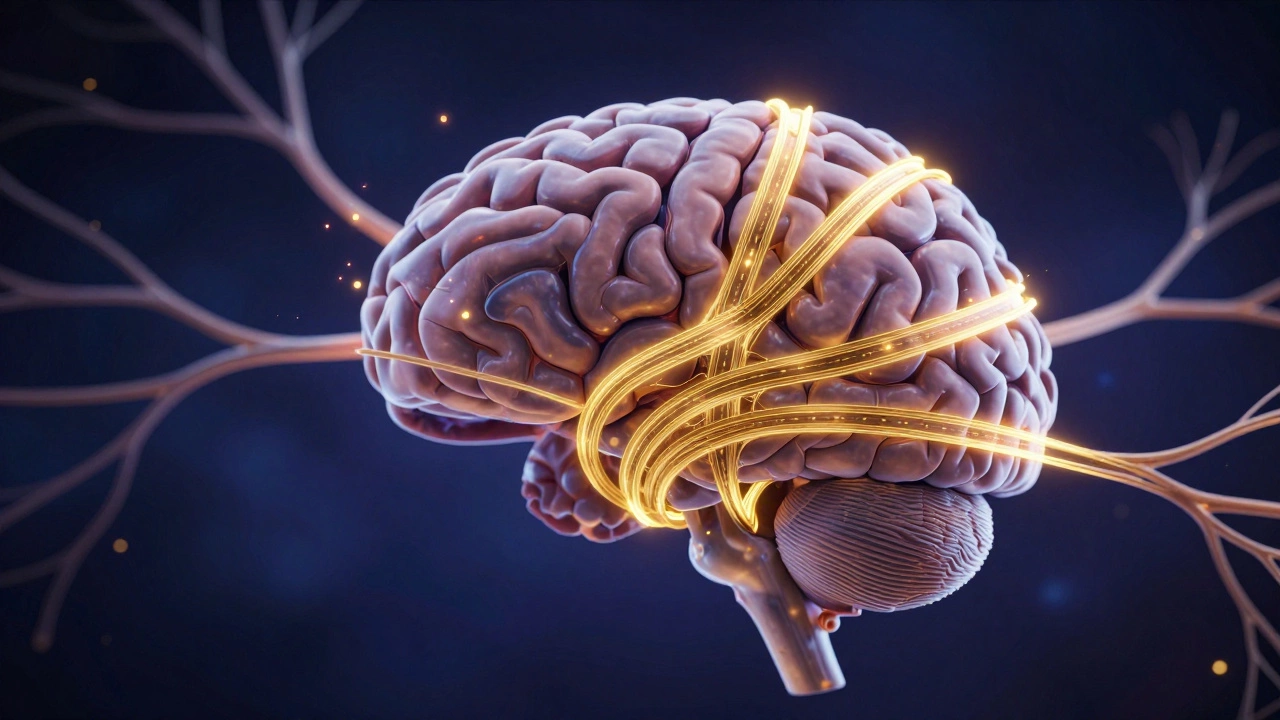
To understand how to 'rewire' anything, we first need to talk about neuroplasticity is the brain's ability to reorganize itself by forming new neural connections throughout life. When you start learning English or any other language, your brain isn't just storing data like a hard drive; it's physically building bridges between neurons. If you only study grammar rules, you're building a tiny, fragile bridge. But when you listen to a native speaker, argue about a movie in that language, and read a book, you're building a multi-lane highway.
The brain operates on a 'use it or lose it' principle. This is why you might remember a phrase from a high school Spanish class ten years later but forget the vocabulary you studied yesterday. The key to permanent rewiring is intensity and frequency. You need to signal to your brain that this new language is essential for survival. In the wild, that's what happens when you move to a new country. At home, you have to simulate that survival instinct.
Breaking the Translation Loop
Most people fail because they treat a new language like a code to be decrypted. They hear an English sentence, translate it into their native tongue, think of a response, and then translate it back. This creates a cognitive bottleneck. To truly rewire your brain, you have to kill the translator in your head.
How do you do that? Stop using bilingual dictionaries and switch to monolingual ones. When you look up a word in English using an English definition, you're forcing your brain to stay within the target language's neural network. This is a form of Cognitive Load, which is the amount of mental effort being used in the working memory. By increasing the load slightly, you push your brain to find more efficient ways to process the information, effectively shortcutting the translation process.
| Feature | Traditional Method | Rewiring Method |
|---|---|---|
| Vocabulary | Lists and translation | Contextual clusters and images |
| Grammar | Memorizing rules/tables | Pattern recognition through input |
| Speaking | Reading aloud from a book | High-stakes real-world conversation |
| Listening | Slow, curated audio clips | Fast, authentic "messy" speech |
Hacking Your Memory with Spaced Repetition
Your brain is designed to forget. It's an efficiency mechanism-if you don't use a piece of information, the brain deletes it to save energy. This is called the forgetting curve. To rewire your brain, you need to intervene right at the moment you're about to forget. This is where Spaced Repetition Systems (SRS) is a learning technique that uses increasing intervals of time between reviews of previously learned material to improve long-term retention.
Instead of cramming 50 words in one night (which only hits short-term memory), an SRS tool like Anki or Memrise shows you a word today, then in three days, then in a week, then in a month. This tells your brain: "This information keeps coming back, so it must be important." Eventually, the word moves from your conscious effort (working memory) into your Long-Term Memory, where it becomes an automatic reflex.
Creating an Artificial Immersion Environment
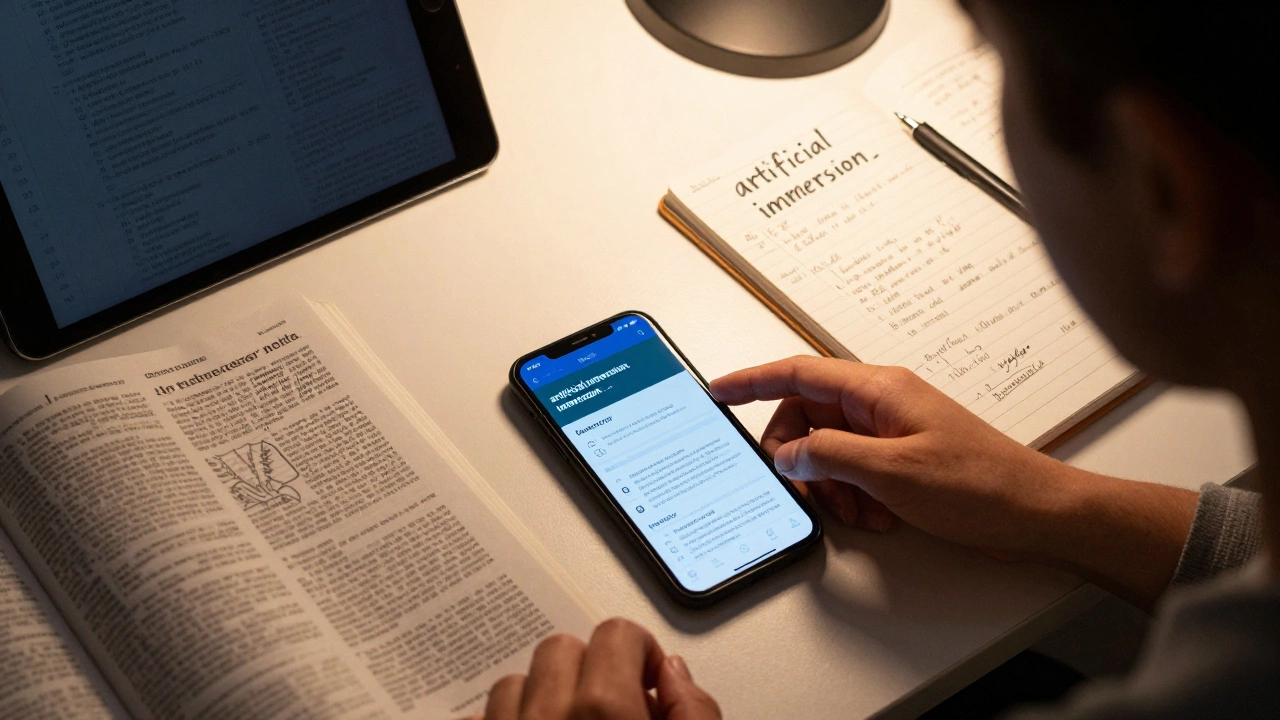
You don't need a plane ticket to change your brain's chemistry. You need to wrap your life in the language. This isn't just about putting sticky notes on your fridge; it's about changing your digital and emotional landscape. Switch your phone's operating system to English. If you spend four hours a day on your phone, that's four hours of forced interaction with the target language.
But the real magic happens with Comprehensible Input, a concept popularized by linguist Stephen Krashen. The idea is that we acquire language when we understand messages-even if we don't understand every single word. If you watch a movie where you understand 70% of the plot through visual cues and a few known words, your brain automatically fills in the gaps for the other 30%. This is how children learn. They don't study grammar; they map sounds to meaning through context.
The Role of Emotion and Stress
Why is a first date in a foreign language more memorable than a year of classroom study? Because of the Amygdala, the part of your brain that processes emotions. When you feel a spark of excitement, fear, or embarrassment, your brain releases chemicals that act like a "save button" for the memories associated with that moment. This is known as emotional tagging.
If you want to rewire your brain faster, get yourself into slightly uncomfortable situations. Join a debate club, try to explain a complex personal story to a stranger, or engage in a friendly argument. The social pressure creates a biological necessity to communicate, which overrides the brain's tendency to stick to the easy, familiar paths of your native language.

Active Recall vs. Passive Review
Reading a textbook is passive. Your brain is in "receive" mode, and it's very lazy. To truly change your neural circuitry, you must use Active Recall. This means forcing your brain to retrieve information from the inside out. Instead of reading a list of vocabulary, cover the definitions and try to scream the word from memory. Instead of listening to a podcast, pause it every two minutes and summarize what happened out loud.
This "struggle" is where the actual rewiring happens. The effort required to retrieve a word strengthens the synaptic connection. If it feels hard, it's working. If it feels easy and smooth, you're likely just experiencing the "illusion of competence," where you recognize the information but can't actually produce it on your own.
Developing a Language-Learning Ritual
Consistency beats intensity. A brain that gets a high dose of language once a week stays the same; a brain that gets a steady drip of language every single day transforms. Create a "language sandwich" in your daily routine. Start your morning with 10 minutes of SRS flashcards (the "appetizer"), spend your commute listening to an authentic podcast (the "main course"), and end your day by journaling three sentences about your day in English (the "dessert").
By anchoring these habits to existing routines-like drinking coffee or brushing your teeth-you reduce the friction of starting. Eventually, the brain stops fighting the new language and starts anticipating it. This is the final stage of rewiring: when the language is no longer a tool you're using, but a lens through which you see the world.
Can adults really rewire their brains as well as children?
Yes, though the process is different. Children have more "plasticity" by default, but adults have a massive advantage in cognitive strategy. Adults can use logic, pattern recognition, and intentional systems like SRS to accelerate their learning in ways children cannot. While a child learns through osmosis, an adult can use "focused neuroplasticity" to target specific weaknesses and build efficiency faster.
How long does it take to feel a physical change in how I think?
Most learners report the first "shift"-where they start thinking in the language without translating-after about 3 to 6 months of consistent, daily immersion. This usually happens once you've reached a threshold of roughly 1,000 to 2,000 active words and have spent significant time in active production (speaking/writing) rather than just passive consumption.
Does sleep affect the rewiring process?
Absolutely. Neural connections are not solidified while you are awake; they are consolidated during REM sleep. When you study a language and then get a full night's sleep, your brain effectively "downloads" the day's patterns into long-term storage. Skipping sleep after a heavy study session is like writing a document and then forgetting to hit the save button.
What is the fastest way to stop translating in my head?
The fastest way is to associate words directly with images or feelings rather than translations. When you learn the word "Apple," don't think of the word for apple in your native language; visualize a crisp, red fruit and imagine its taste. By bypassing the native language entirely and linking the target word directly to a sensory experience, you build a direct neural path.
Is it better to focus on grammar or vocabulary for rewiring?
Prioritize vocabulary and patterns. Your brain can derive grammar rules from enough exposure (comprehensible input), but it cannot guess a word it has never heard. Focus on "lexical chunks"-common phrases that go together-rather than isolated words. This allows you to speak in fluid blocks of language, which is how native speakers actually process speech.
Next Steps for Your Journey
If you're just starting, don't try to do everything at once. Pick one "rewiring" habit this week-maybe switching your phone's language or starting a 10-minute SRS streak. Once that feels automatic, add another layer. If you find yourself hitting a plateau, it usually means you've stopped challenging your brain. Move from easy content to "messy" content: watch a live stream, join a fast-paced group chat, or try to explain a complex topic like politics or science in your target language. The moment you feel that slight mental strain is the moment your brain is actually changing.

Dhruv Ainsley
I am an education specialist with a focus on international educational systems, particularly in India. I enjoy exploring how educational practices can be improved to foster better learning environments. Writing about such topics allows me to share insights and encourage meaningful discussions. My work seeks to inspire educational reforms that prioritize inclusive and quality learning experiences.