Sep
1

- by Dhruv Ainsley
- 0 Comments
Fluency Progress Estimator
According to research, reaching conversational fluency takes approximately 600–750 hours for languages close to yours, or up to 1,100+ hours for distant ones. Use this tool to estimate your timeline.
Your Practice Plan
Enter your details to see your estimated path to fluency.
💡 Pro Tip from the Article:
Consistency beats intensity. Five minutes of focused speaking every day is more effective than one hour of cramming once a week. Try "Habit Stacking": attach your practice to an existing routine (e.g., "After I pour coffee, I record a 30-second voice note").
You know the grammar rules. You can read a novel without stumbling. But when a native speaker asks you how your weekend was, your brain freezes. The words are there, but they’re stuck behind a wall of translation anxiety. This isn’t a talent issue; it’s a training gap. Most people study English like history-memorizing facts-but speaking is a sport. You don’t get better at basketball by reading about dribbling; you get better by doing it until your muscles remember the motion.
Fluency isn’t about having a perfect accent or knowing every obscure word in the dictionary. It’s about flow. It’s the ability to express thoughts without constant mental calculation. If you want to bridge the gap between "I understand" and "I speak," you need to change how you interact with the language daily. Here is how you train yourself to speak English fluently by shifting from passive consumption to active production.
Stop Translating, Start Thinking
The biggest bottleneck for non-native speakers is the internal translator. You hear a question, translate it into your native language, formulate an answer, translate it back into English, and then speak. By the time you open your mouth, the conversation has moved on. To fix this, you have to kill the middleman.
Start small. Don’t try to think complex philosophical arguments in English immediately. Look around your room right now. Pick three objects. Name them in English. Then describe what they are doing or where they are. Do not form full sentences if you can’t. Just label. "Blue pen." "On desk." "Needs ink." This simple exercise forces your brain to bypass the translation layer. Over weeks, expand this to narrating your day. While brushing your teeth, say, "The water is cold." While walking to work, say, "That bus is late." It feels silly, but it builds the neural pathways that connect concepts directly to English sounds, skipping your mother tongue entirely.
The Power of Shadowing
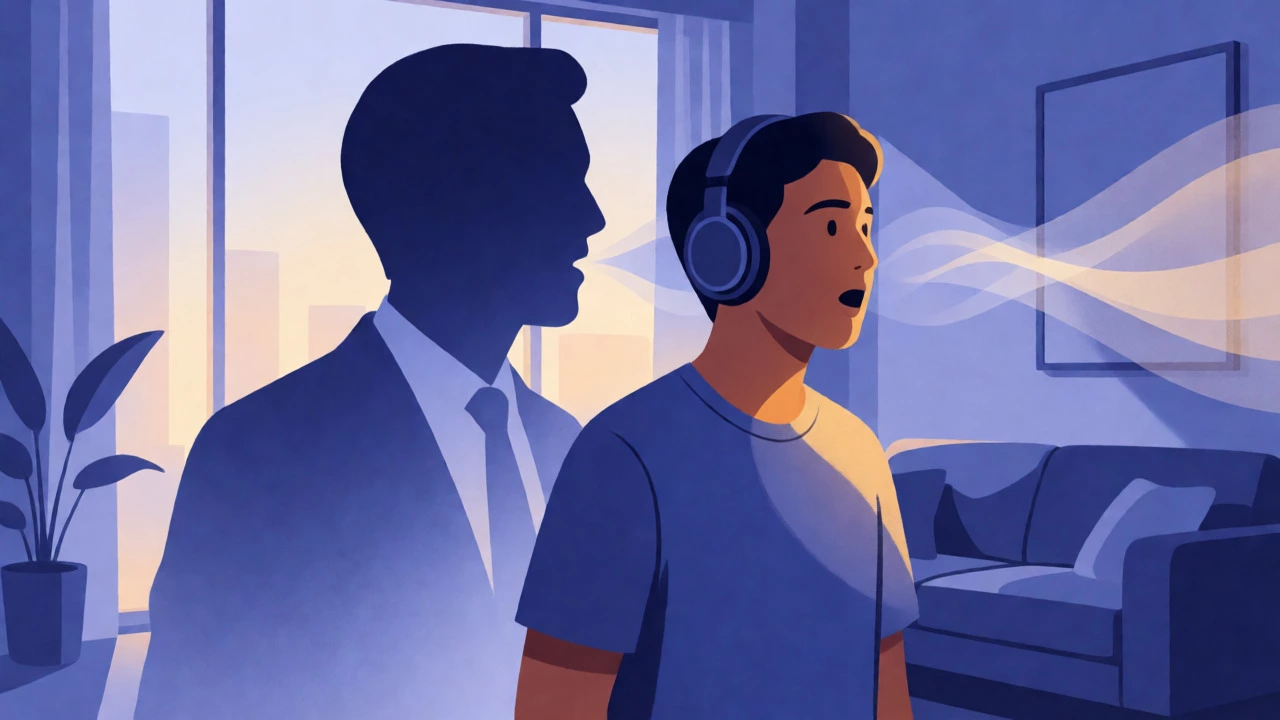
If you only listen to English, you’re training your ears, not your mouth. Your vocal cords need muscle memory for the rhythm and intonation of the language. Enter Shadowing a technique where you repeat audio immediately after hearing it, mimicking speed, tone, and pauses. This method, popularized by polyglot Alexander Arguelles, works because it decouples meaning from pronunciation. You aren’t trying to understand the deep meaning while you speak; you’re just copying the sound pattern.
Find a podcast or a YouTube video with a clear speaker. Use something short-a two-minute clip is enough. Listen once for context. Then, play it again and speak along with the speaker, almost simultaneously. Try to match their energy. If they whisper, you whisper. If they pause, you pause. It will feel awkward and fast. That’s good. You’re overloading your brain so it stops analyzing grammar and starts reacting phonetically. Do this for ten minutes a day. After a month, you’ll notice your speech flows more naturally because you’ve practiced the "music" of English, not just the notes.
Embrace the "Good Enough" Rule
Perfectionism is the enemy of fluency. Many learners stay silent because they fear making mistakes. They worry about using the wrong preposition or mispronouncing a vowel. But here’s the truth: native speakers care about communication, not correctness. If you say "I go to store yesterday," everyone understands you. They might mentally correct it, but they won’t judge you harshly.
Set a rule for yourself: never stop talking to self-correct mid-sentence. If you realize you used the wrong tense, keep going. Fix it in the next sentence if necessary, but maintain the flow. Fluency is measured by continuity, not accuracy. When you prioritize keeping the conversation moving, your brain relaxes. Paradoxically, this relaxation often leads to fewer errors because you’re not paralyzed by fear. Accept that you will make mistakes. In fact, aim for them. Each mistake is data. Did you use "in" instead of "on"? Note it later. But don’t let it halt your speech now.
Create Low-Stakes Speaking Opportunities
You don’t need a paid tutor to practice speaking. You need low-stakes environments where embarrassment costs you nothing. Talk to yourself. Yes, really. Record voice memos on your phone. Describe your lunch. Explain a movie plot. Listen back. You’ll hear your own hesitation points and filler words (like "um" or "uh"). This self-audit is brutal but effective.
Next, leverage technology. Apps like Tandem or HelloTalk connect you with people who want to learn your language and help you with theirs. These exchanges are casual. No grades, no tests. Or, join online communities related to your hobbies. If you like gaming, join a Discord server and use voice chat. If you like coding, participate in a live stream Q&A. When you’re focused on the content (the game, the code), you forget you’re practicing English. This contextual immersion is far more powerful than rote memorization because the language becomes a tool, not a subject.
Active Recall vs. Passive Input
Reading and listening are passive inputs. They fill your tank, but they don’t drive the car. To speak, you must output. This is where Active Recall comes in: testing yourself on vocabulary and phrases rather than just reviewing them. Instead of re-reading a list of words, hide the definition and force your brain to retrieve the meaning. Better yet, force your mouth to produce it.
Take a new phrase you learned today. Say it out loud five times in different contexts. Change the tense. Change the subject. Make a joke with it. Ask a question with it. This creates multiple neural hooks for the same piece of information. When you encounter a similar situation in real life, your brain has several paths to reach that phrase, making retrieval faster and more automatic. Passive input builds recognition; active output builds accessibility.
| Method | Primary Benefit | Best For | Pitfall |
|---|---|---|---|
| Passive Listening | Ear adaptation & vocabulary exposure | Beginners building familiarity | False sense of progress |
| Grammar Study | Accuracy & structure understanding | Writing & formal exams | Hesitation during speech |
| Shadowing | Intonation, rhythm & speed | Intermediate speakers plateauing | Can be tiring initially |
| Self-Talk | Thinking in English & confidence | All levels, especially introverts | Lack of external feedback |

Consistency Beats Intensity
You might think you need to study four hours a day to see results. Wrong. Five minutes of focused speaking practice every day beats one hour of cramming once a week. Language acquisition relies on repetition and reinforcement. Your brain prunes connections it doesn’t use regularly. If you speak English once a week, those pathways weaken. If you speak for ten minutes daily, they strengthen.
Tie your practice to existing habits. Practice English while cooking. Practice while commuting. Practice while waiting in line. Attach the new habit to an old one. This is called habit stacking. "After I pour my coffee, I will record a 30-second voice note about my plans for the day." It takes less effort than scheduling a dedicated study session, so you’re more likely to stick with it. And consistency is the only magic trick in language learning.
Frequently Asked Questions
How long does it take to become fluent?
It varies, but generally, reaching conversational fluency takes 600-750 hours of active practice for languages close to your native tongue, and up to 1,100+ hours for distant ones. Consistency matters more than raw hours. Daily 30-minute sessions yield better long-term retention than weekly marathons.
Do I need a perfect accent to be considered fluent?
No. Accent is part of your identity and indicates where you’re from. Fluency is about clarity and ease of communication. As long as you are understood easily and can express complex ideas without strain, you are fluent. Aim for intelligibility, not imitation.
What if I freeze up when someone speaks to me quickly?
This is common due to processing overload. Practice asking for clarification politely: "Could you repeat that slower?" or "What did you mean by...?" Also, practice shadowing to improve your processing speed. The more you expose yourself to natural speeds, the faster your brain adapts.
Is watching movies with subtitles helpful?
Yes, but choose wisely. Use English subtitles, not your native language. This connects spoken sounds to written text. Eventually, try turning subtitles off for short segments to test your comprehension. Movies provide cultural context and slang that textbooks miss.
Should I focus on vocabulary or grammar first?
For speaking, prioritize high-frequency vocabulary and common sentence structures. Grammar supports these, but don’t obsess over obscure rules. Learn chunks of language (phrases) rather than isolated words. Knowing how to say "I’m looking forward to it" is more useful than knowing the subjunctive mood.

Dhruv Ainsley
I am an education specialist with a focus on international educational systems, particularly in India. I enjoy exploring how educational practices can be improved to foster better learning environments. Writing about such topics allows me to share insights and encourage meaningful discussions. My work seeks to inspire educational reforms that prioritize inclusive and quality learning experiences.