Feb
10
- by Dhruv Ainsley
- 0 Comments
U.S. Physician Salary Calculator
Calculate Your Potential Salary
Estimated Salary
Your Estimated Salary
$0
Note: This is for fully licensed physicians, not residents
How This Works
Based on the article content, we've incorporated salary data for 2025. Your estimated salary is calculated using:
- Base salary by specialty (from the article's table)
- Location-based adjustments (15-25% higher for high-cost areas)
- Residency status considerations
Remember that foreign-trained doctors must complete USMLE exams and residency programs before earning these salaries.
When people ask about the salary of an MBBS doctor in the USA, they’re often thinking about how much money a doctor makes after finishing medical school - especially if they’re comparing it to countries like India or the UK. But here’s the thing: the term MBBS doesn’t really exist in the U.S. medical system. In India, South Africa, or the UK, MBBS stands for Bachelor of Medicine, Bachelor of Surgery - it’s the degree you get after five and a half years of study. In the U.S., you don’t earn an MBBS. You earn an MD - Doctor of Medicine - after four years of medical school, followed by residency. So if you’re asking about an MBBS doctor working in the U.S., you’re really asking about a foreign-trained doctor practicing medicine here.
How Much Do Foreign-Trained Doctors Make in the USA?
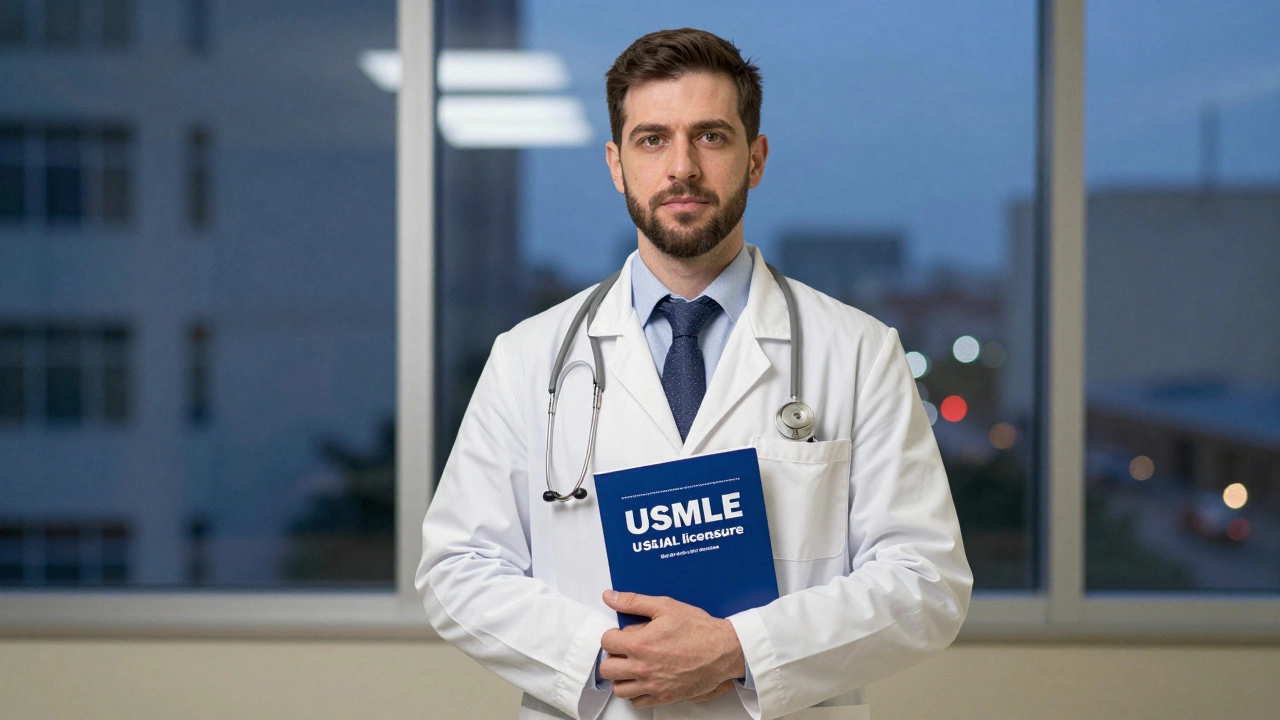
Doctors who graduated from medical schools outside the U.S. - including those with MBBS degrees - can practice in America, but only after passing a long and expensive certification process. They must pass the USMLE (United States Medical Licensing Examination) steps 1, 2 CK, 2 CS, and 3. Then they enter a residency program, which lasts 3 to 7 years depending on the specialty. Only after that can they get a medical license and start working independently.
Once licensed, their pay is the same as U.S.-trained doctors. There’s no separate pay scale for foreign graduates. The average salary for a physician in the U.S. in 2025 is around $260,000 per year, according to Medscape’s annual physician compensation report. But that number varies wildly based on specialty, location, and years of experience.
Salary Breakdown by Specialty
Not all doctors earn the same. A family medicine doctor in rural Iowa might make $220,000. A neurosurgeon in New York City could pull in over $750,000. Here’s what actual 2025 salary data looks like for common specialties:
| Specialty | Average Salary | Residency Length |
|---|---|---|
| Neurosurgery | $750,000 | 7 years |
| Orthopedic Surgery | $670,000 | 5 years |
| Cardiology | $510,000 | 4 years |
| Anesthesiology | $470,000 | 4 years |
| Radiology | $460,000 | 4 years |
| Emergency Medicine | $420,000 | 3-4 years |
| Internal Medicine | $340,000 | 3 years |
| Family Medicine | $260,000 | 3 years |
| Pediatrics | $250,000 | 3 years |
These figures are for fully licensed, practicing physicians. They don’t include residents. Most foreign-trained doctors spend 3 to 7 years as residents earning between $60,000 and $75,000 a year - depending on the hospital and year of training. That means someone who finished their MBBS in 2020 might not hit six figures until 2026 or later, even if they started residency right away.
Location Matters More Than You Think
Doctors in California, New York, or Massachusetts typically earn 15-25% more than those in states like Mississippi, Alabama, or South Dakota. Why? Higher cost of living, more competition, and higher patient volumes. But it’s not just about big cities. A dermatologist in a small town in Texas might make more than one in a crowded urban clinic because they have fewer competitors and more private practice opportunities.
Also, hospitals in rural areas often offer signing bonuses of $100,000 or more to attract doctors. If you’re an MBBS graduate willing to work in a shortage area - like a rural community hospital or federally qualified health center - you could get help paying off student loans, free housing, or even tuition reimbursement.

Student Debt Can Eat Into Earnings
Most U.S.-trained doctors graduate with $200,000 to $300,000 in student debt. Foreign-trained doctors often have less debt - many MBBS programs in India cost under $20,000 total. But here’s the catch: the cost of USMLE prep, visa fees, residency applications, and relocation can add up to $15,000-$25,000. Plus, many international doctors take out loans to cover living expenses during residency.
So while a doctor from Mumbai might start with far less debt than a doctor from Harvard, they still face financial pressure early on. It’s not uncommon for foreign-trained doctors to work extra shifts, take locum tenens jobs, or delay buying a home until their fifth year of practice.
How Long Does It Take to Start Earning Like a U.S. Doctor?
Let’s say you finished your MBBS in 2022 and moved to the U.S. right after. Here’s a realistic timeline:
- 2022-2023: Study for and pass USMLE Step 1 and Step 2 CK
- 2023: Apply for residency, interview, match
- 2024-2027: Complete 3-year residency (e.g., internal medicine)
- 2027: Get licensed, start full-time job
That’s five years from graduation to earning a full attending salary. If you’re doing a longer residency - say, neurosurgery - it could be eight years. That means if you graduated at 24, you might not hit $300,000 a year until you’re 32 or older.

Is It Worth It?
Some MBBS graduates from India, Pakistan, Bangladesh, or Nigeria choose to stay home because salaries there are rising. A senior doctor in a private hospital in Delhi can now earn ₹25-40 lakh per year ($30,000-$50,000), which is a lot more than what a resident makes in the U.S.
But in the U.S., the long-term earning potential is unmatched. Even after taxes, insurance, and student loans, most physicians end up with a net worth over $1 million by age 45. The work is harder - longer hours, more paperwork, more burnout - but the financial payoff is real.
For many, it’s not just about money. It’s about access to cutting-edge technology, research opportunities, and the chance to work in a system where innovation moves fast. A doctor in the U.S. might use AI tools for diagnosis, robotic surgery systems, or participate in clinical trials that aren’t available elsewhere.
What About Non-Clinical Roles?
Not every MBBS graduate wants to be a bedside doctor. Many go into medical writing, pharmaceutical sales, healthcare consulting, or medical tech startups. These roles don’t require a license and often pay well. A medical director at a health tech company might earn $200,000-$350,000 without ever seeing a patient.
Some foreign-trained doctors even become medical educators, teaching U.S. students how to pass the USMLE. These positions are in high demand and offer flexible hours.
Final Reality Check
There’s no shortcut. No magic trick. If you have an MBBS and want to practice in the U.S., you’re signing up for a 5-8 year journey filled with exams, relocations, financial strain, and emotional stress. The salary at the end is impressive - but only if you stick it out.
And remember: the U.S. doesn’t hire MBBS doctors. It hires licensed physicians. Your degree matters less than your license. Focus on passing the USMLE. Build your clinical experience. Network with mentors. And don’t let the salary numbers distract you from the real work ahead.
Can I practice as a doctor in the USA with just an MBBS degree?
No. You cannot practice medicine in the U.S. with only an MBBS degree. You must pass all three steps of the USMLE, complete a U.S. residency program, and obtain a state medical license. The MBBS is not recognized as a standalone qualification for licensure in the U.S.
How long does it take for an MBBS graduate to start earning a full doctor’s salary in the USA?
It typically takes 5 to 8 years after finishing your MBBS. This includes time to prepare for and pass the USMLE exams, apply for and match into a residency program, and complete the residency (3-7 years). Most doctors start earning full attending salaries only after residency ends.
Do foreign-trained doctors earn less than U.S.-trained doctors?
No. Once licensed and working as an attending physician, foreign-trained doctors earn the same salary as U.S.-trained doctors. Pay is based on specialty, location, experience, and employer - not where you went to medical school.
What is the average USMLE pass rate for international medical graduates?
For Step 1, the pass rate for international medical graduates was around 74% in 2024. For Step 2 CK, it was about 82%. These rates are lower than for U.S. medical school graduates, who pass at rates above 95%. Preparation, language skills, and clinical exposure significantly impact success.
Are there any programs that help foreign doctors move to the USA?
Yes. Many rural and underserved hospitals offer J-1 visa sponsorship, loan repayment programs, and signing bonuses. The Conrad 30 Waiver Program allows foreign doctors to stay in the U.S. after residency if they commit to working in a shortage area for three years. Some states also have fast-track licensing for doctors from certain countries.

Dhruv Ainsley
I am an education specialist with a focus on international educational systems, particularly in India. I enjoy exploring how educational practices can be improved to foster better learning environments. Writing about such topics allows me to share insights and encourage meaningful discussions. My work seeks to inspire educational reforms that prioritize inclusive and quality learning experiences.