Jun
5

- by Dhruv Ainsley
- 0 Comments
IIT-JEE Subject Difficulty Analyzer
Rate Your Comfort Level (1-10)
Adjust sliders based on your current preparation status
Physics
Chemistry
Mathematics
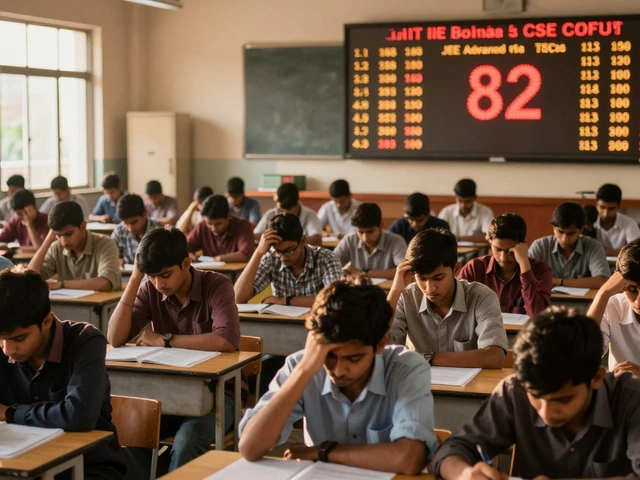
Imagine sitting for the IIT-JEE is India's most prestigious and challenging engineering entrance examination conducted by the National Testing Agency (NTA) for JEE Main and IITs for JEE Advanced.. The clock is ticking. You have three subjects to tackle: Physics, Chemistry, and Mathematics. Every aspirant asks the same question at some point: "Which one will actually break me?" There is no single answer because "toughness" is subjective. It depends entirely on your brain's wiring, your school background, and how you handle pressure.
However, based on data from coaching institutes, rank distributions, and student feedback over the last decade, a clear pattern emerges. For the majority of students, Mathematics is the score-killer. For those with weak foundations, Physics is the conceptual wall. And for everyone else, Chemistry is the trap that looks easy but eats up time. Let’s dissect each subject to see where the real pain points lie.
The Myth of the "Easiest" Subject: Why Chemistry Traps Students
Many students walk into their preparation thinking Chemistry is the safe haven. They believe it’s just about memorizing reactions and formulas. This is a dangerous misconception. In the modern JEE Advanced is the second stage of the Joint Entrance Examination, known for its high difficulty level, negative marking, and complex multi-concept questions designed to filter top 0.1% candidates., Chemistry has evolved. It is no longer rote learning; it is application-based.
Organic Chemistry requires a logical flow. If you don’t understand the mechanism of electron movement, you cannot predict the product of a reaction. Inorganic Chemistry demands vast retention power. You need to remember exceptions to trends, color changes, and specific reagents. Physical Chemistry involves numerical problems that rival Physics in complexity. The trap here is confidence. Students often skip deep practice in Chemistry because they think they can "cram" it later. When they hit the exam hall, they find questions that link Organic mechanisms with Physical calculations. That connection is where ranks drop.
- Organic Chemistry: High logic, low calculation. Tough if you lack conceptual clarity.
- Inorganic Chemistry: Pure memory game. Tough if you procrastinate studying NCERT books.
- Physical Chemistry: Numerical heavy. Tough if your math skills are weak.
Physics: The Conceptual Wall
Physics is often cited as the hardest subject by students who struggle with visualization. Unlike Math, which has definite steps, Physics requires you to model real-world scenarios. Can you visualize a block sliding down an inclined plane while friction acts against it? Can you imagine electric field lines around a charged sphere?
The difficulty in Physics is a branch of science concerned with the nature and properties of matter and energy, tested in JEE through mechanics, electromagnetism, optics, and modern physics. lies in its breadth. Mechanics alone takes months to master. Then comes Electrodynamics, which abstracts concepts further. Many students find that they can solve textbook problems but freeze when the question adds a twist-like a non-uniform rod or a varying magnetic field.
If you are someone who likes concrete answers and step-by-step procedures, Physics will feel chaotic. It demands intuition. You have to guess what principle applies before you even start writing equations. This mental load makes it exhausting during a three-hour exam. However, for students with strong spatial reasoning, Physics can be a scoring subject because the syllabus is finite compared to Math.
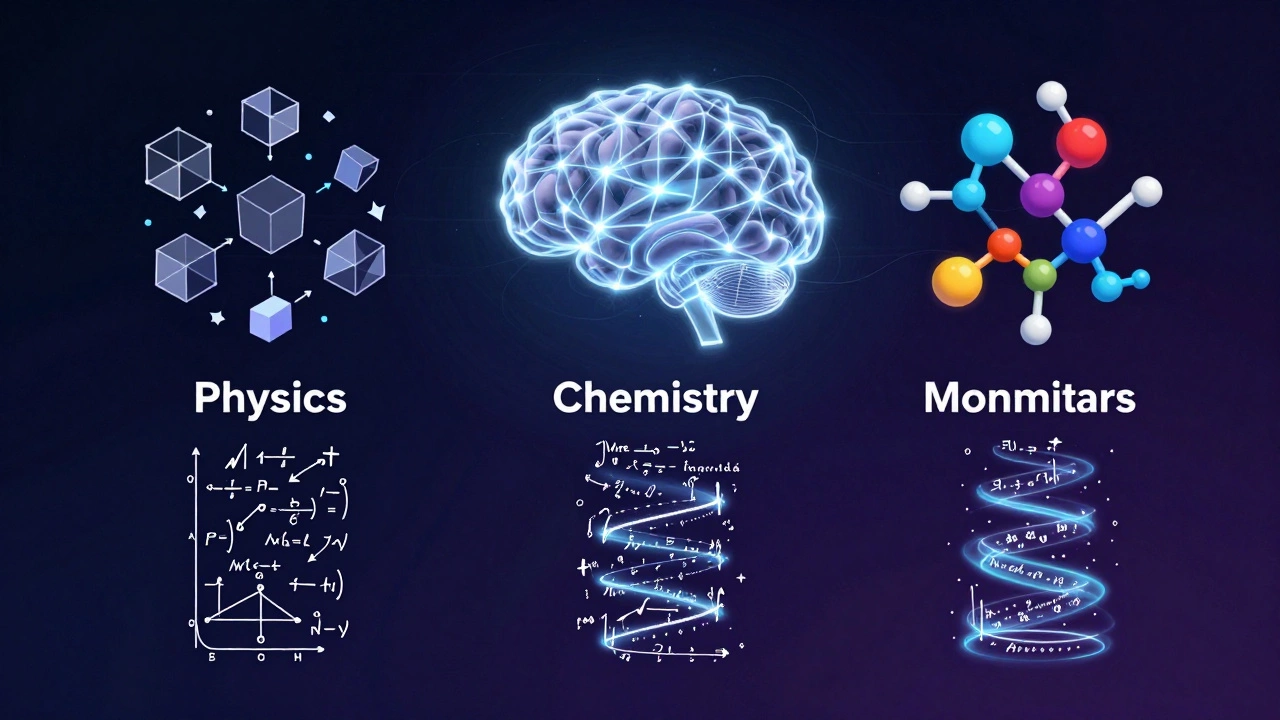
Mathematics: The Rank Decider
Statistically, Mathematics has the lowest average scores across both JEE Main and JEE Advanced. Why? Because it is vast, time-consuming, and unforgiving. One small calculation error in Algebra can ruin an entire problem. In Geometry, missing a single condition can lead you down the wrong path completely.
The sheer volume of topics in Mathematics is a discipline involving numbers, structures, space, and change, covering calculus, algebra, trigonometry, and coordinate geometry in the JEE syllabus. is overwhelming. Calculus is not just one topic; it is Limits, Continuity, Differentiation, Integration, and Differential Equations. Each sub-topic has dozens of techniques. Add to this Coordinate Geometry and Vectors, and you have a subject that requires hundreds of hours of dedicated practice.
The biggest challenge with Math is time management. In the exam, a single Math question might take 15 minutes to solve correctly. If you get stuck, you lose significant marks. Unlike Physics, where you can sometimes estimate an answer using dimensional analysis, Math offers no such shortcuts. It is binary: right or wrong. This pressure makes it the "toughest" subject for many aspirants aiming for top IITs.
| Subject | Primary Challenge | Time Consumption | Scoring Potential |
|---|---|---|---|
| Physics | Conceptual Visualization | Moderate | High (if concepts are clear) |
| Chemistry | Retention & Application | Low to Moderate | Very High (consistent scoring) |
| Mathematics | Vast Syllabus & Calculation Speed | Very High | Variable (high risk, high reward) |
Why Your Personal Weakness Defines the Hardest Subject
You cannot generalize toughness. For a student with a strong mathematical background, Physics might be the hardest because they struggle with physical intuition. For a student who loves logic puzzles, Math might be fun, making Chemistry the hardest due to its memorization requirements.
Consider this scenario: Student A is great at deriving formulas but forgets them quickly. For Student A, Inorganic Chemistry is hell. Student B remembers everything but hates calculations. For Student B, Physical Chemistry and Integral Calculus are nightmares. Identifying your personal bottleneck early is crucial. Don't compare your struggle with others. Compare your current performance with your past performance.
Coaching centers often track "drop rates" in mock tests. Data consistently shows that students drop out of the top percentiles primarily due to poor Math scores. However, among those who crack it, the differentiator is often Physics accuracy. Chemistry is the baseline; you must score well there to survive. Math and Physics determine how far you go.

Strategic Approach to Conquer the "Toughest" Subject
Once you identify which subject feels heaviest for you, change your strategy. Do not treat all subjects equally in terms of daily study hours.
- Diagnose First: Take a full-length mock test without preparation. Analyze which section gave you the most anxiety and lowest accuracy. That is your toughest subject.
- For Math: Focus on high-weightage chapters first. Calculus and Algebra carry more weight than Statistics or Complex Numbers. Master the basics before attempting advanced tricks.
- For Physics: Draw diagrams for every problem. Visualizing the scenario reduces cognitive load. Practice derivation of formulas to understand their limits.
- For Chemistry: Make short notes for Inorganic Chemistry. Use mnemonics. For Organic, focus on named reactions and mechanisms rather than isolated facts.
Consistency beats intensity. Studying your tough subject for 30 minutes every day is better than cramming for 10 hours once a week. The brain needs sleep to consolidate difficult concepts. If you avoid your hard subject, it grows harder. Face it head-on, in small doses.
The Role of Mock Tests in Reducing Perceived Difficulty
Difficulty is often psychological. When you are unfamiliar with the pattern, everything feels hard. As you take more Mock Tests are simulated exams designed to replicate the actual JEE environment, helping students assess preparation levels, improve speed, and build stamina., the "toughness" diminishes. You start recognizing question patterns. You learn which questions to skip. You develop a rhythm.
Many students find Math tough initially because they try to solve every question. Learning to identify solvable questions within 30 seconds is a skill that transforms Math from a monster into a manageable task. Similarly, in Physics, realizing that certain complex setups simplify with basic principles reduces fear.
The goal is not to eliminate difficulty but to manage it. Accept that some questions will be hard. The difference between a rank of 10,000 and 1,000 is often just the ability to stay calm when facing a tough problem and move on to secure marks elsewhere.
Is Physics or Math harder in JEE Advanced?
Statistically, Mathematics has lower average scores, making it harder for the majority. However, Physics is conceptually deeper. If you have weak visualization skills, Physics will feel harder. If you have slow calculation speed, Math will feel harder.
Can I ignore Chemistry to focus on Math and Physics?
No. Chemistry is considered the "scoring" subject. Ignoring it means losing guaranteed marks. Top rankers usually score 90+ in Chemistry. It provides the stability needed to take risks in Math and Physics.
Which chapter is the hardest in JEE Math?
Calculus, specifically Indefinite Integration and Differential Equations, is often cited as the hardest due to its variety of methods and complexity. Coordinate Geometry is also challenging due to lengthy calculations.
How much time should I spend on my toughest subject?
Allocate 40-50% of your daily study time to your weakest subject. Consistent daily practice is key. Avoid binge-studying. Small, regular sessions help build long-term retention and reduce anxiety.
Does the difficulty level change between JEE Main and Advanced?
Yes. JEE Main focuses on speed and breadth. JEE Advanced focuses on depth and multiple concepts per question. Math becomes significantly tougher in Advanced, while Physics requires deeper theoretical understanding.

Dhruv Ainsley
I am an education specialist with a focus on international educational systems, particularly in India. I enjoy exploring how educational practices can be improved to foster better learning environments. Writing about such topics allows me to share insights and encourage meaningful discussions. My work seeks to inspire educational reforms that prioritize inclusive and quality learning experiences.