Dec
2
- by Dhruv Ainsley
- 0 Comments
College Course Cost Calculator
Calculate Your Course Cost
Find out the true cost of accredited college courses based on your location and needs. This calculator accounts for tuition, fees, and textbooks.
When you’re trying to get a college education but don’t have thousands to spend, the question isn’t just what is the cheapest college course-it’s how can you actually get credit that matters without going broke.
Let’s cut through the noise. There are real, accredited, low-cost college courses available right now-not just free videos or certificate programs that don’t count toward a degree. Some cost less than $50. Some are free if you don’t need a certificate. And yes, you can use them to build real college credits.
Free college courses that give you real credit
Not all free courses are created equal. Many platforms like Coursera and edX offer free access to course materials-lectures, readings, quizzes-but charge $50-$100 to get graded work and an official transcript. But there’s a smarter way.
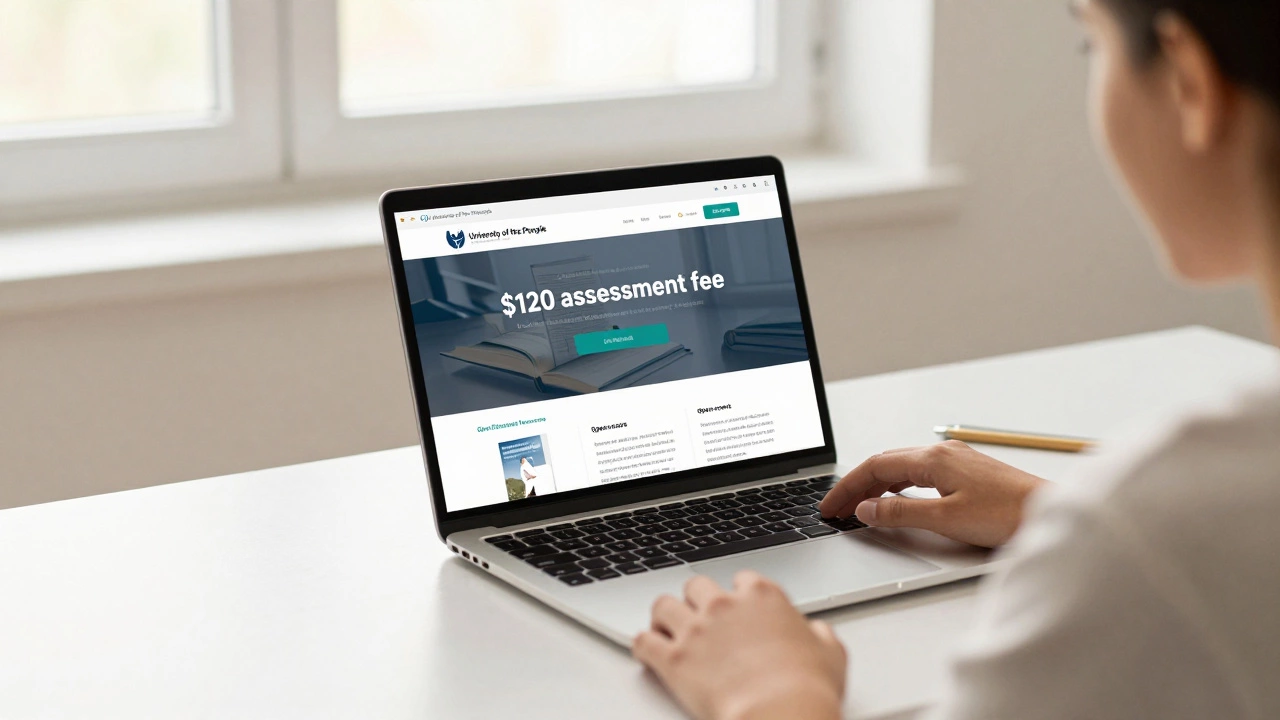
Some universities let you audit courses for free and still earn credit if you pay only for the official assessment. For example, the University of the People (UoPeople) is a tuition-free, accredited online university. You don’t pay for classes, but you pay a $120 assessment fee per course. That’s it. No textbooks. No subscription fees. You can take up to 10 courses per year for under $1,200 total if you’re aiming for an associate’s degree.
Another option: Community colleges in the U.S. offer online courses for as low as $80 per credit hour. A 3-credit course? Around $240. Some states like California and Oregon have programs that let residents take one free online course per term through their state’s community college system. In Texas, Lone Star College offers online courses for $89 per credit hour for residents.
How to find the absolute cheapest course
Here’s how to hunt down the lowest price without falling for scams:
- Look for non-credit courses if you only want knowledge. These are often free on platforms like MIT OpenCourseWare or Khan Academy.
- If you need credit, search for credit-bearing courses at public community colleges. Filter by “online” and “in-state tuition.”
- Check for “pay-what-you-can” or “fee waiver” options. Many schools offer these if you show financial need.
- Avoid platforms that lock you into subscriptions. Stick to one-time payment models.
- Use the California Community Colleges Online Education Initiative-they list all free or low-cost online courses with transferable credit.
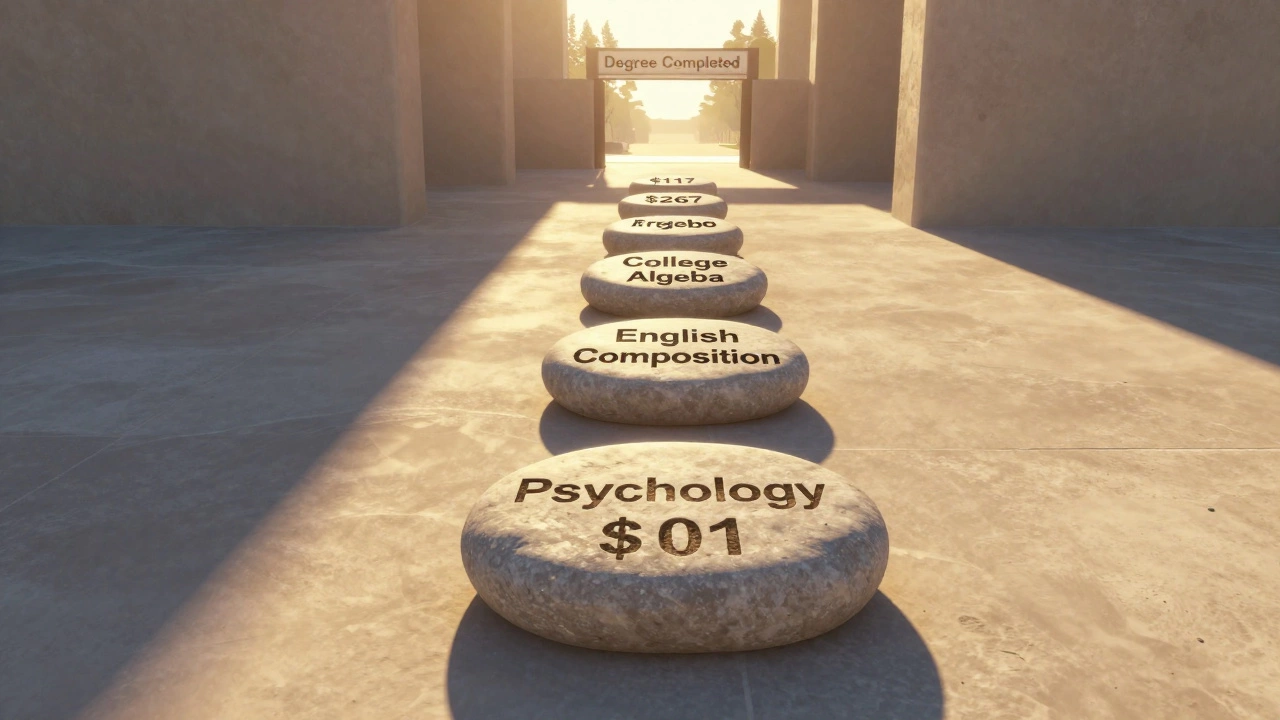
One real example: In 2024, a student in Florida took an online psychology course through Miami Dade College for $117 total. That included everything-textbook access, assignments, and a transferable credit that later counted toward their bachelor’s at a state university.
What counts as a “college course”?
Not every online class is a real college course. Here’s what to look for:
- It’s offered by an accredited institution (check the U.S. Department of Education’s database or equivalent in your country).
- You can get a transcript with a grade and credit hours.
- The course appears on a course catalog with a course code (like PSY101 or MATH105).
- It’s eligible for credit transfer to other schools.
If you’re outside the U.S., check your country’s national education authority. In Australia, TAFE NSW offers online courses with credit toward diplomas for under $200 per subject. In Canada, Athabasca University lets you take single courses for about $600 CAD-less than most private online providers.
Top 5 cheapest college courses in 2025
Here are actual courses you can enroll in right now, with prices as of December 2025:
| Course | Provider | Cost | Credits | Transferable? |
|---|---|---|---|---|
| Introduction to Psychology | University of the People | $120 | 3 | Yes |
| College Algebra | Lone Star College (Texas) | $267 | 3 | Yes |
| English Composition I | Miami Dade College (Florida) | $117 | 3 | Yes |
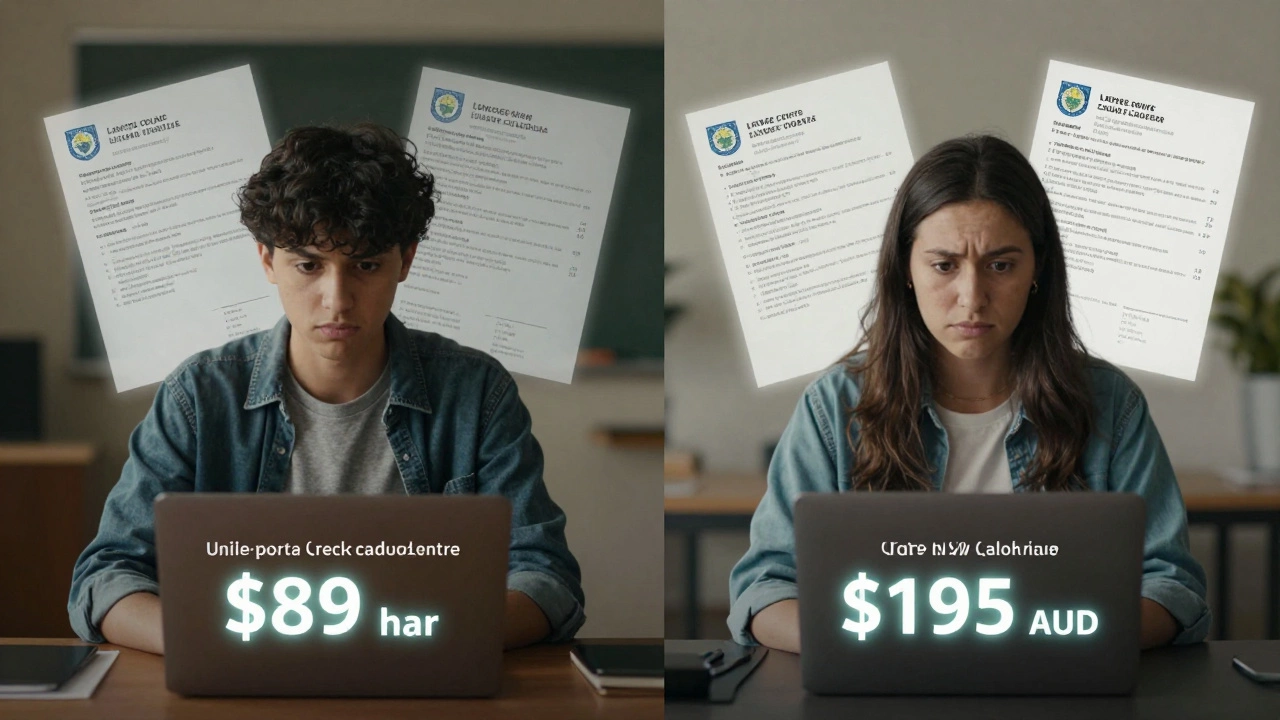
| Introduction to Business | TAFE NSW (Australia) | $195 AUD | 6 | Yes |
| Basic Statistics | Athabasca University (Canada) | $595 CAD | 3 | Yes |
Notice something? The cheapest courses are often general education requirements-Psychology, Math, English, Business. These are the same courses you’d take in your first year of college. Taking them cheaply now saves you thousands later.
Hidden costs you might miss
Even if the course is $50, watch out for:
- Textbook fees-Some schools charge $80+ for digital access codes. Look for courses that use free Open Educational Resources (OER).
- Proctoring fees-Some schools charge $25-$50 to monitor your final exam remotely. Avoid them if possible.
- Transcript fees-Getting an official transcript can cost $10-$25. Budget for it.
- Technology requirements-You need a reliable computer and internet. Some schools offer free loaner laptops if you qualify.
University of the People uses only free textbooks. So do most TAFE NSW and community college courses in the U.S. That’s a huge saving.
Can you use these courses to get a degree?
Yes. Thousands of students do it every year. Here’s how:
- Take 1-2 low-cost courses to test if you like online learning.
- Apply those credits toward a degree program later. Most universities accept up to 60 credits from community colleges or accredited online providers.
- Transfer into a bachelor’s program with 1-2 years already done. That cuts your total cost by 40-60%.
For example, a student in Georgia took five $100 courses through Georgia State University’s online extension program. Later, they transferred into the University of Georgia’s business program. They saved $12,000 on tuition alone.
What if you’re not in the U.S.?
You don’t need to be American to take these courses. Most U.S. community colleges accept international students for online courses. You’ll pay out-of-state tuition, which is higher-but still under $400 per course.
In Australia, TAFE offers online diplomas for under $1,500 total. In the UK, the Open University lets you take single modules for £1,500 (around $1,900), but you can pay in installments. In India, NPTEL courses from IITs are free, and you can pay ₹500 (under $6) for a verified certificate.
The key is: credit matters more than where it comes from. If the institution is accredited and the course appears on a transcript, it counts.
Start here: Your 3-step plan
If you’re serious about the cheapest path to college credit, follow this:
- Find one course-Go to California Community Colleges Online or University of the People and pick a course you need for your future degree.
- Enroll and pay only what’s required-Skip the certificate if you don’t need it yet. Focus on getting the credit.
- Save your transcript-Even if you don’t enroll in a full degree now, keep the official record. It’ll be worth more later.
You don’t need to go back to school full-time. You don’t need to borrow money. You just need to take one step-right now.
Can I get a degree for free using cheap courses?
You can’t get a full degree for free, but you can get most of the credits for very little. For example, University of the People lets you earn a bachelor’s degree by paying only $120 per course for assessments. At 40 courses, that’s under $5,000 total-far less than the average $40,000 for a U.S. public university. Combine that with free textbooks and no housing costs, and you’re looking at one of the most affordable degrees available.
Are free courses from Coursera or edX worth anything?
Only if you pay for the verified certificate and the course is part of a credit-granting program. Most free courses on these platforms are non-credit. You’ll get a certificate, but colleges won’t accept it as transfer credit. If you want credit, look for courses labeled as “credit-bearing” or offered through a university’s official online extension program.
Do I need to be a U.S. citizen to take these cheap courses?
No. Most U.S. community colleges and online universities accept international students for individual courses. You’ll pay out-of-state tuition, which is higher than in-state rates, but still much cheaper than full-degree programs. Some schools, like University of the People, charge the same rate for everyone regardless of location.
What if I need help with the coursework?
Most low-cost courses offer free tutoring or discussion forums. University of the People has peer-to-peer learning groups. Community colleges often provide free online writing centers and math labs. You don’t need to pay extra for support-just ask. The resources are there.
How long do these courses take?
Most are 8-16 weeks long, similar to a regular semester. Some community colleges offer accelerated 6-week courses. If you can commit 8-12 hours per week, you can finish one course in under four months. Many people take one course at a time while working full-time.
Can I use these credits in Australia or Canada?
Yes, if the institution is accredited and the course content matches your local requirements. Australian universities like the University of Melbourne and Monash accept transfer credits from U.S. community colleges if the course is equivalent. Canadian universities do the same. Always check with your target school before enrolling, but credit transfer is common and well-established.
Dhruv Ainsley
I am an education specialist with a focus on international educational systems, particularly in India. I enjoy exploring how educational practices can be improved to foster better learning environments. Writing about such topics allows me to share insights and encourage meaningful discussions. My work seeks to inspire educational reforms that prioritize inclusive and quality learning experiences.