Jun
2

- by Dhruv Ainsley
- 0 Comments
Government Job Match Estimator
Your Profile
Select your current qualifications to find the best fit.
Why this fits you:
Enter your details to see which government roles offer the highest probability of acceptance.
You want a stable career with good benefits, but you also want to avoid spending years studying for exams that have acceptance rates lower than Ivy League universities. It is a fair trade-off. You are looking for the path of least resistance into the public sector, which offers employment within federal, state, or local government agencies. The short answer is that there is no single "easy" job because every position requires meeting specific criteria. However, some roles have significantly lower barriers to entry regarding education, experience, and competitive testing.
In 2026, the landscape of government jobs preparation has shifted toward skills-based hiring rather than just degree-based hiring. Many agencies are dropping strict degree requirements for certain administrative and technical roles. This change opens doors for candidates who might have been previously overlooked. If you know where to look and how to apply, you can secure a permanent position without jumping through excessive hoops.
Understanding What Makes a Job "Easy" to Get
Before we list specific titles, we need to define what "easy" means in this context. An easy job usually has three characteristics: high turnover or high demand, minimal educational prerequisites, and a straightforward application process. These jobs often fill quickly because they are essential to daily operations but may not offer the prestige of higher-level policy roles.
For example, Administrative Support Specialist positions often require only a high school diploma or an associate’s degree. Unlike specialized roles like Forensic Accountant or Diplomat, these roles do not require professional certifications or advanced degrees. The competition is lower because many applicants assume all government jobs require a bachelor's or master's degree. This misconception works in your favor if you are willing to start at the entry level.
Another factor is location. Rural government offices often struggle to attract talent compared to metropolitan hubs. Applying for positions in smaller towns or remote areas can drastically reduce the number of competitors against you. While the pay scale might be slightly lower due to locality adjustments, the cost of living is often reduced as well, balancing out the equation.
Top Entry-Level Government Jobs with Low Barriers
If you are ready to start applying, here are five specific job families that consistently have openings and relatively accessible entry requirements. These roles exist across various levels of government, from local municipal offices to federal agencies.
- General Office Clerk: This is perhaps the most accessible role. Duties include filing, data entry, and answering phones. Most agencies accept candidates with a high school diploma. Some states even allow candidates to qualify based on equivalent work experience. The exam, if required, is typically a basic aptitude test covering reading comprehension and arithmetic.
- Mailroom Assistant / Courier: Government buildings move massive amounts of physical and digital mail. These roles require reliability and physical stamina more than academic credentials. In many jurisdictions, these positions are non-competitive or have very simple screening processes.
- Customer Service Representative: Agencies like the Social Security Administration, Department of Motor Vehicles, or local tax offices constantly need staff to handle public inquiries. These roles value communication skills over technical expertise. Training is provided on the job, so prior industry knowledge is rarely mandatory.
- Jail Guard / Corrections Officer (Entry Level): While physically demanding, the barrier to entry is low. You generally need to be 18 or 21, pass a background check, and complete a training academy. Because turnover is high, recruitment is aggressive, and they often waive certain educational requirements for veterans or those with relevant experience.
- Data Entry Clerk: With the digitization of government records, there is a steady demand for accurate data input. Speed and accuracy are key. No specialized degree is needed, though familiarity with Excel or database software helps. This role is often a stepping stone to more complex administrative positions.
| Job Title | Typical Education Required | Competition Level | Key Skill Needed |
|---|---|---|---|
| Office Clerk | High School Diploma | Low to Medium | Organization |
| Mailroom Assistant | High School Diploma | Low | Reliability |
| Customer Service Rep | High School or Associate's | Medium | Communication |
| Corrections Officer | High School Diploma | Medium (Physical Test) | Stamina & Discipline |
| Data Entry Clerk | High School Diploma | Low | Typing Speed |
The Application Process: Where Most People Fail
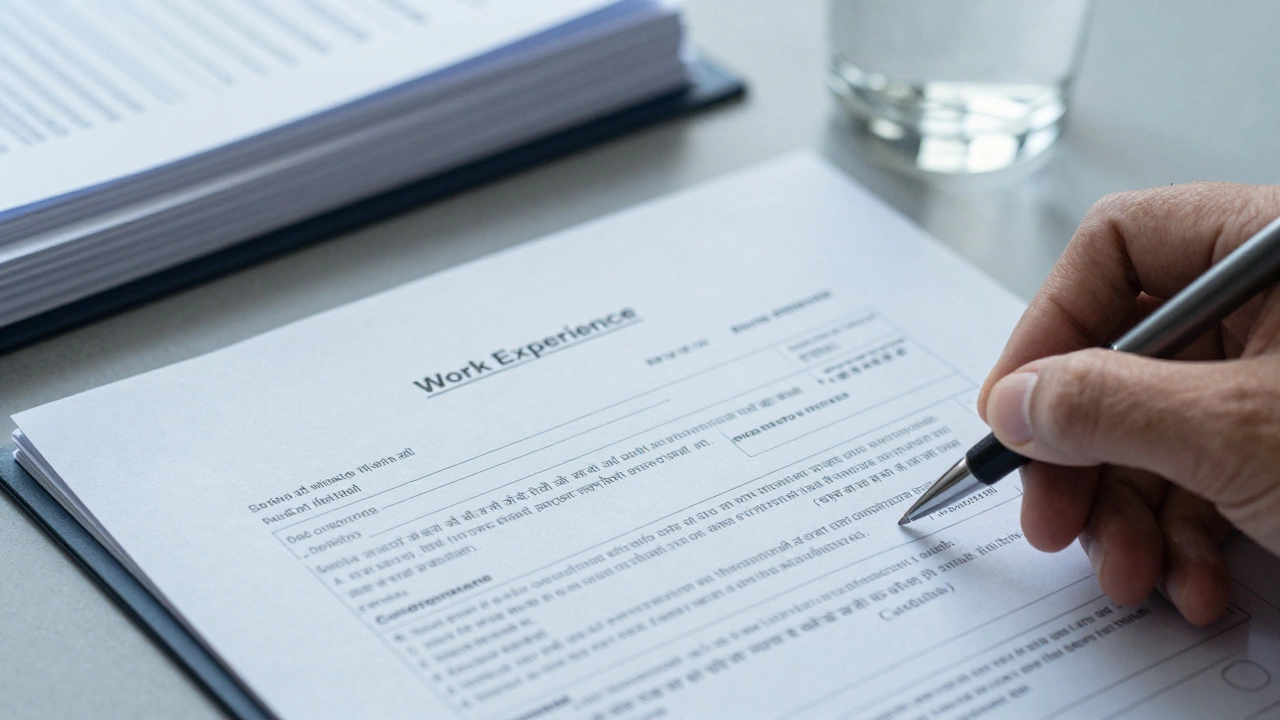
Finding the job is half the battle; passing the initial screening is the other half. Many candidates fail not because they lack skills, but because they misunderstand how government resume scoring works. Unlike private companies that use Applicant Tracking Systems (ATS) to scan for keywords, many government agencies use a rigorous keyword-matching algorithm for their initial review.
If the job description says "3 years of experience in budget analysis," and your resume says "Helped with finances," you will likely be rejected automatically. You must mirror the language of the job posting exactly. This is known as "keyword optimization." It sounds like cheating, but it is simply speaking the same language as the hiring manager.
Furthermore, government applications often ask detailed questions about your history. For instance, you might need to list every address you have lived at for the past ten years. Missing a single detail can lead to disqualification. Patience and attention to detail are critical. Do not rush this step. Treat the application form as part of the interview.
Strategies to Increase Your Chances
To make the process easier, you can employ several strategies that give you an edge over generic applicants. First, consider applying for internships or temporary appointments. Many agencies hire interns who perform similar duties to full-time employees. If you perform well, converting to a permanent status is often much easier than applying for a new vacancy from scratch. It is essentially an extended interview.
Second, leverage veteran status if applicable. In many countries, including the United States and Australia, veterans receive preference points in the hiring process. This can bump you ahead of otherwise equally qualified candidates. Even if you are not a veteran, understanding these preference rules helps you identify when you have a competitive advantage.
Third, network internally. Government jobs are often filled by referrals before they are ever posted publicly. Connect with current employees on professional networking sites. Ask them about the culture and the application process. Informational interviews can provide insights that no guidebook can offer.

Pitfalls to Avoid During Preparation
Avoid the temptation to apply for everything. Quality matters more than quantity. Tailoring your resume for each application takes time, but it yields better results. Generic applications get generic rejections. Focus on roles that match your existing skills closely. The less gap between your current profile and the job requirements, the easier the approval process will be.
Also, do not ignore background checks. Government jobs require thorough security clearances or background investigations. Any criminal record, drug use, or financial irregularity can disqualify you. Be honest on your forms. Lying is an immediate cause for termination if discovered later. If you have minor infractions, disclose them and explain the context. Integrity is valued highly in the public sector.
Finally, do not underestimate the importance of the interview. Even for entry-level roles, behavioral interviews are common. Use the STAR method (Situation, Task, Action, Result) to structure your answers. Prepare examples that demonstrate teamwork, problem-solving, and adherence to rules. These are core values in government work.
Long-Term Career Growth
Starting in an "easy" job does not mean you are stuck there forever. Government employment offers structured career ladders. Once you are inside, you can take internal courses, earn certifications, and transfer to different departments. Many senior officials started as clerks or assistants. The key is to show initiative and learn the organizational culture.
Additionally, government pensions and retirement plans are still among the best available. While salaries may not match top-tier tech companies, the stability and benefits package provide long-term financial security. This makes the initial effort of navigating the application process worthwhile.
Do I need a college degree to get an easy government job?
No, many entry-level government jobs such as office clerk, mailroom assistant, and customer service representative only require a high school diploma. Some agencies may accept equivalent work experience in place of formal education. Always check the specific qualifications listed in the job announcement.
How long does the government hiring process take?
The process can vary widely, but it typically takes between 3 to 6 months from application to offer. This includes background checks, reference verification, and multiple rounds of interviews. Temporary or contract positions may hire faster, sometimes within a few weeks.
Can I get hired if I have a criminal record?
It depends on the severity and recency of the offense, as well as the nature of the job. Minor offenses from many years ago may not disqualify you for entry-level administrative roles. However, jobs involving finance, law enforcement, or sensitive information will have stricter standards. Always be honest during the background check process.
Are government jobs really stable?
Yes, government jobs are generally considered very stable. They are less susceptible to economic downturns compared to private sector roles. Additionally, they often come with strong unions, defined benefit pension plans, and comprehensive healthcare coverage, providing long-term security.
What is the best way to prepare for a government aptitude test?
Focus on practicing basic math, reading comprehension, and logical reasoning. Many free practice tests are available online. Familiarize yourself with the format of the specific test used by the agency you are applying to. Time management is crucial, so practice under timed conditions.

Dhruv Ainsley
I am an education specialist with a focus on international educational systems, particularly in India. I enjoy exploring how educational practices can be improved to foster better learning environments. Writing about such topics allows me to share insights and encourage meaningful discussions. My work seeks to inspire educational reforms that prioritize inclusive and quality learning experiences.