May
22
- by Dhruv Ainsley
- 0 Comments
E-Learning Platform Quality Checker
Select the features your platform offers to calculate its 2026 readiness score.
User Experience (UX)
Technical Reliability
Engagement Mechanics
Ready to Evaluate
Select features above to see how the platform stacks up against 2026 standards.
Evaluation Feedback:
You’ve probably sat through an online course that felt like wading through mud. The video buffers every thirty seconds, the quiz interface looks like it was built in 1998, and half the time you can’t find your notes because the menu structure makes no sense. It’s frustrating, right? But here’s the thing: that frustration isn’t just bad luck. It’s a failure of design.
In 2026, we have thousands of digital platforms are software systems designed to facilitate interaction, content delivery, and data exchange between users. When applied to education, these become e-learning platforms, which serve millions of students globally. Yet, most still fail at the basics. So, what actually separates a tool that helps you learn from one that just gets in the way?
It comes down to three non-negotiable pillars: intuitive user experience (UX), robust technical infrastructure, and meaningful engagement mechanics. If any one of these is weak, the whole platform crumbles. Let’s break down exactly what makes a digital platform worth your time.
The User Experience Must Feel Invisible
Good UX doesn’t mean flashy graphics or animated transitions. It means frictionless navigation. When you log into a platform, you shouldn’t have to think about how to use it. You should just start learning.
Think about the last app you used daily-maybe Spotify or Instagram. You don’t remember how to open them; you just do. That’s the goal for e-learning. A good platform uses clear information architecture. This means categories are logical, search functions actually work, and progress tracking is visible without digging through five sub-menus.
Consider accessibility as a core feature, not an afterthought. In 2026, WCAG 2.2 compliance is standard. This includes proper contrast ratios for visually impaired users, keyboard navigability for those with motor disabilities, and screen reader compatibility. If a platform forces you to squint at gray text on a white background, it has already failed you.
- Clean Interface: Minimal clutter, focus on content.
- Intuitive Navigation: No more than three clicks to reach any resource.
- Mobile Responsiveness: Seamless transition between desktop and phone screens.
- Accessibility Standards: Built-in support for diverse needs.
If you’re building or choosing a platform, ask yourself: Can my grandmother use this? If the answer is no, the UX is too complex.
Technical Reliability Is Non-Negotiable
You can have the best-designed interface in the world, but if the server crashes during your final exam, it’s useless. Technical stability is the backbone of any successful digital platform.
In the early days of online learning, buffering videos were a joke. Today, they’re unacceptable. A good platform uses adaptive bitrate streaming, which adjusts video quality based on your internet speed. This ensures smooth playback even on slower connections. Cloud infrastructure providers like AWS or Azure handle peak loads so that when everyone logs in at 9 AM, the site doesn’t slow to a crawl.
Data security is equally critical. With GDPR in Europe and various privacy laws in Australia and the US, platforms must protect student data rigorously. Encryption at rest and in transit is mandatory. Two-factor authentication (2FA) should be available for all accounts. If a platform asks for your credit card info over an unsecured connection, run away.
| Feature | Why It Matters | Standard in 2026 |
|---|---|---|
| Adaptive Streaming | Prevents buffering on low bandwidth | HLS/DASH protocols |
| Cloud Scalability | Handles traffic spikes | AWS/Azure/GCP integration |
| Data Encryption | Protects sensitive user info | AES-256 encryption |
| Offline Access | Learns without internet | PWA (Progressive Web App) support |
Don’t overlook offline capabilities. Many learners commute or live in areas with spotty Wi-Fi. Progressive Web Apps (PWAs) allow users to download lessons and sync progress later. This flexibility is a hallmark of a truly good platform.

Engagement Mechanics Keep Learners Coming Back
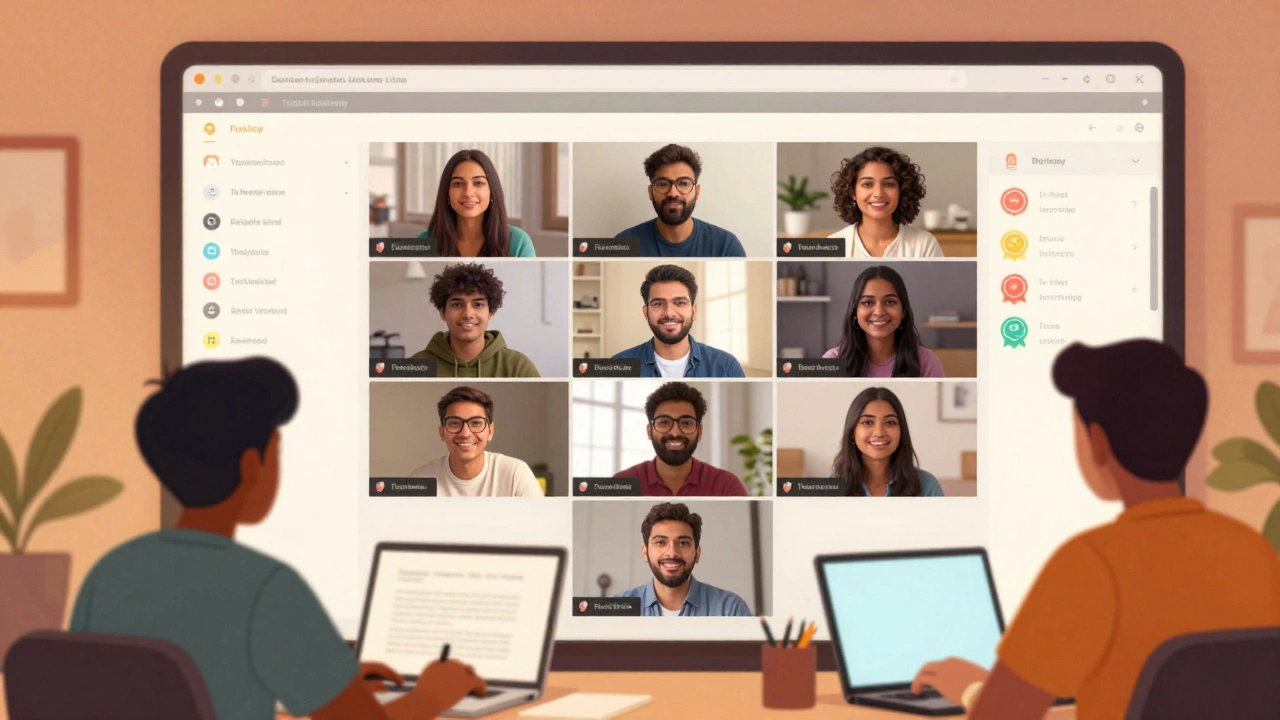
Here’s a hard truth: most people drop out of online courses because they feel isolated. A good digital platform combats this by fostering community and active participation.
Gamification is often misunderstood. It’s not just about badges and points. Effective gamification taps into intrinsic motivation. Think leaderboards that reward consistency, not just speed. Or streak counters that encourage daily practice. These elements make learning feel like a game, reducing the mental load of discipline.
Social features are equally important. Discussion forums, peer review systems, and live Q&A sessions create a sense of belonging. When you can ask a question and get a real human response within hours, you’re less likely to quit. Platforms like Coursera and edX excel here by integrating structured discussion threads tied directly to course modules.
Personalization is the next frontier. AI-driven recommendations suggest next steps based on your performance. If you struggle with algebra, the platform might offer extra practice problems before moving on. This adaptive learning path keeps you in your “zone of proximal development”-challenged but not overwhelmed.
Content Quality and Structure Matter More Than Quantity
A platform is only as good as the content it delivers. But quantity doesn’t equal quality. A thousand poorly recorded lectures won’t help you learn anything.
Good platforms curate content rigorously. They ensure instructors are subject matter experts, not just charismatic speakers. Videos should be concise-ideally under ten minutes per segment-to maintain attention spans. Transcripts and subtitles are essential for reinforcement and accessibility.
Assessment methods also need thought. Multiple-choice quizzes are easy to grade but poor at measuring deep understanding. Better platforms include project-based assessments, peer reviews, and reflective journals. These require higher-order thinking skills and provide richer feedback.
Regular updates keep content relevant. In fast-moving fields like tech or medicine, outdated information is dangerous. A good platform has a version control system that flags old materials and pushes updates automatically.
How to Evaluate Any Digital Platform in 2026
So, how do you know if a platform is good? Use this simple checklist before signing up or investing.
- Test the Free Trial: Don’t just browse. Complete a full lesson. Note any friction points.
- Check Mobile Performance: Open the app on your phone. Does it crash? Is the font readable?
- Review Support Options: Can you reach a human if something breaks? Look for live chat or email response times.
- Analyze Community Activity: Are forums active? Do instructors respond to questions?
- Verify Security Certifications: Look for ISO 27001 or SOC 2 compliance badges.
If a platform fails two or more of these checks, look elsewhere. Your time and money are valuable. Don’t waste them on tools that fight against you.
The best digital platforms disappear into the background. They don’t demand attention; they enable focus. They’re reliable, engaging, and respectful of your intelligence. As we move further into 2026, the bar is rising. Expect nothing less.
What is the most important feature of a good e-learning platform?
The most important feature is intuitive user experience (UX). If learners struggle to navigate the interface, find resources, or track their progress, they will disengage regardless of content quality. Frictionless design reduces cognitive load and allows focus on learning itself.
Do I need a high-speed internet connection for modern digital platforms?
Not necessarily. Leading platforms now use adaptive bitrate streaming and Progressive Web App (PWA) technology. This allows videos to adjust quality based on your connection speed and enables offline downloads for later viewing. However, stable connectivity improves the overall experience, especially for live sessions.
How can I tell if an e-learning platform is secure?
Look for explicit mentions of data encryption standards like AES-256, two-factor authentication (2FA) options, and compliance with regulations such as GDPR or CCPA. Reputable platforms often display security certifications like ISO 27001 or SOC 2 on their trust pages. Avoid platforms that request sensitive data over unsecured HTTP connections.
Is gamification effective in serious learning environments?
Yes, when implemented correctly. Gamification boosts engagement by tapping into intrinsic motivation through streaks, progress bars, and immediate feedback. However, it should enhance, not distract from, learning objectives. Overly childish rewards can undermine credibility in professional settings.
What should I do if a platform lacks mobile responsiveness?
Avoid using it as your primary learning tool. In 2026, over 60% of online learning occurs on mobile devices. A platform that doesn’t adapt to smaller screens indicates poor technical maintenance and likely other underlying issues. Consider alternatives that offer dedicated apps or fully responsive web designs.

Dhruv Ainsley
I am an education specialist with a focus on international educational systems, particularly in India. I enjoy exploring how educational practices can be improved to foster better learning environments. Writing about such topics allows me to share insights and encourage meaningful discussions. My work seeks to inspire educational reforms that prioritize inclusive and quality learning experiences.