Dec
9
- by Dhruv Ainsley
- 0 Comments
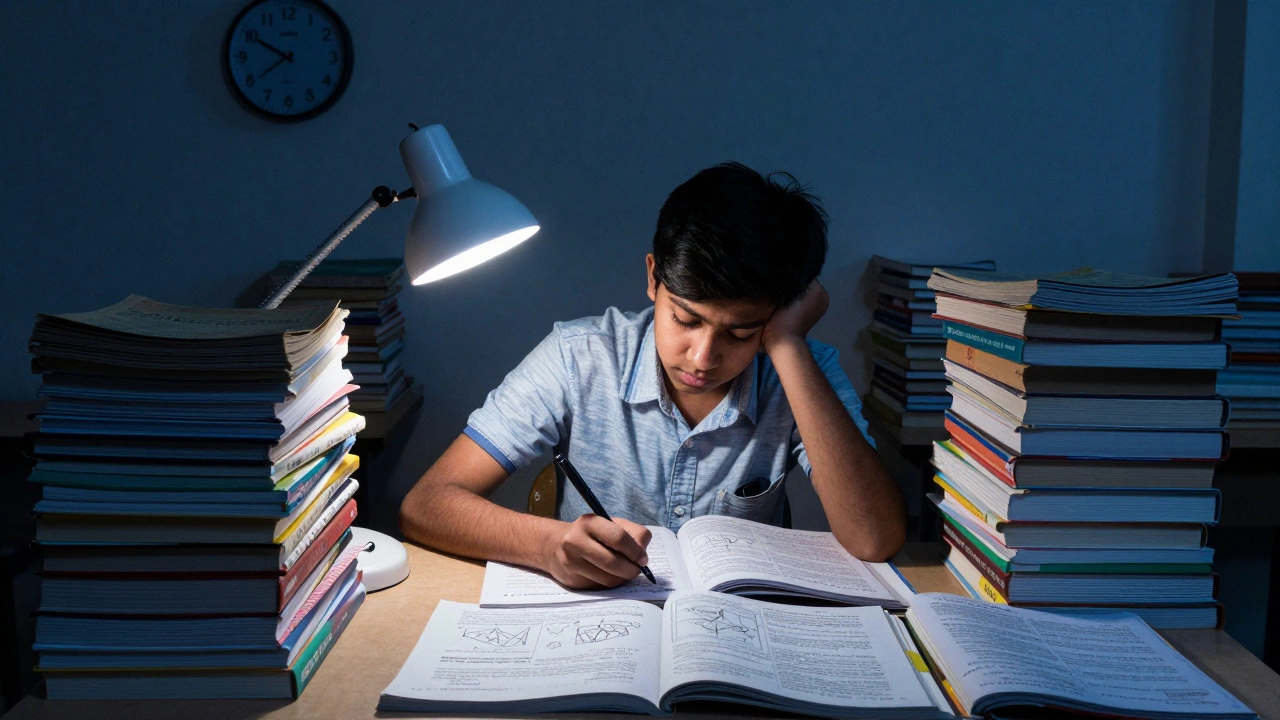
If you’ve ever heard parents or teachers in India whispering about the toughest board, they’re not talking about luck or hard work-they’re talking about syllabus depth, exam pressure, and how much the system demands from a 15-year-old. Two names come up again and again: ICSE and CBSE. But only one of them is truly the hardest. And the other? It’s not easy either.
ICSE: The Syllabus That Never Stops
The Council for the Indian School Certificate Examinations (CISCE), which runs the ICSE board, doesn’t just test what you know-it tests how much you’ve read. The ICSE curriculum for Class 10 covers 10 subjects, including English, a second language, Mathematics, Science, History, Geography, and Computer Applications. That’s more than CBSE’s 5-6 core subjects. But here’s the catch: ICSE doesn’t let you skip. You can’t drop Physics if you’re bad at it. You have to pass all of them.
ICSE papers are known for long-form, analytical questions. A single History question might ask you to compare the economic policies of two colonial governors using primary sources. A Science question could require you to explain the biochemical pathway of photosynthesis with labeled diagrams. There’s no multiple-choice safety net. You’re expected to write detailed, structured answers-sometimes 200-300 words long.
Students who switch from CBSE to ICSE often say the same thing: “I used to cram. Now I have to understand.” The board doesn’t reward memorization. It rewards clarity, precision, and depth. Textbooks are thick. Teachers assign 50-page readings per week. And the exam papers? They’re designed to separate the top 5% from the rest.
CBSE: The Pressure Cooker
CBSE-the Central Board of Secondary Education-isn’t known for depth. It’s known for volume. Over 20 million students take CBSE exams every year. That’s more than the entire population of Australia. And because it’s the gateway to national-level entrance exams like JEE and NEET, the pressure isn’t just academic-it’s life-changing.
CBSE’s syllabus is narrower than ICSE’s, but it’s brutal in how it’s tested. You don’t need to write essays on the French Revolution. You need to solve 30 calculus problems in 3 hours. You don’t need to analyze Shakespeare’s metaphors-you need to memorize 150 chemical reactions and their conditions. The questions are formula-driven, time-sensitive, and unforgiving. One calculation error, and you lose 5 marks. One misremembered formula, and your entire answer collapses.
CBSE doesn’t care if you understand the concept. It cares if you can replicate it under stress. The exam pattern is designed for speed, not reflection. Students spend months solving past papers-sometimes 50+ per subject-just to get their timing right. The board releases sample papers every year, and every one of them is harder than the last. Why? Because they’re training students for engineering and medical entrance exams, where the competition is 1 in 10,000.
Why ICSE Feels Harder in Class 10
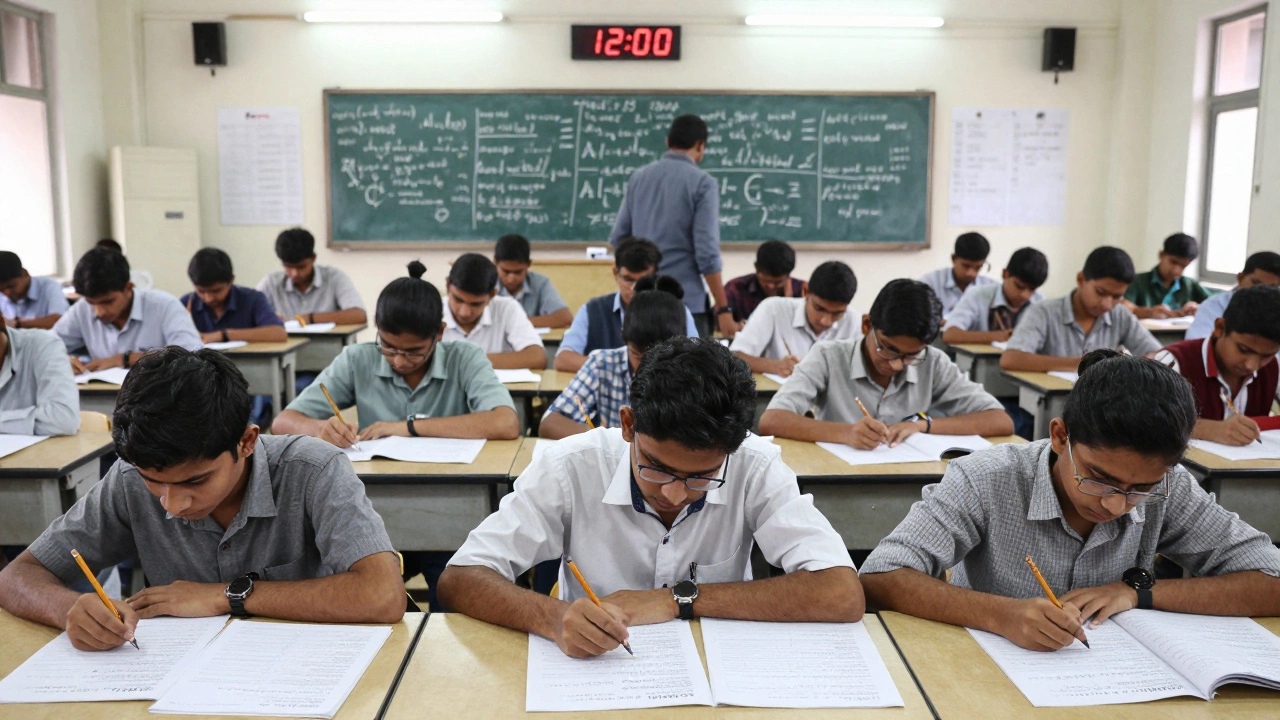
By Class 10, ICSE students are already exhausted. The workload is heavier. The expectations are higher. The grading is stricter. ICSE doesn’t give grace marks for messy handwriting or incomplete answers. If your diagram is labeled wrong, you lose the mark. If your essay lacks a conclusion, you lose half the points. There’s no partial credit for effort.
And then there’s the language. ICSE English is not just grammar and vocabulary-it’s literary analysis. Students must read novels like To Kill a Mockingbird or The Merchant of Venice in full. They’re expected to write essays on themes, symbolism, and author intent. Many students from Hindi or regional language backgrounds struggle here. The board doesn’t offer simplified versions. You either meet the standard or you don’t.
ICSE also requires practicals in every science subject. A single Biology practical exam can take 3 hours. You’re graded on observation, accuracy, and presentation. One wrong measurement, and your entire internal assessment drops by 20%. No second chances.
Why CBSE Feels Harder in Class 12
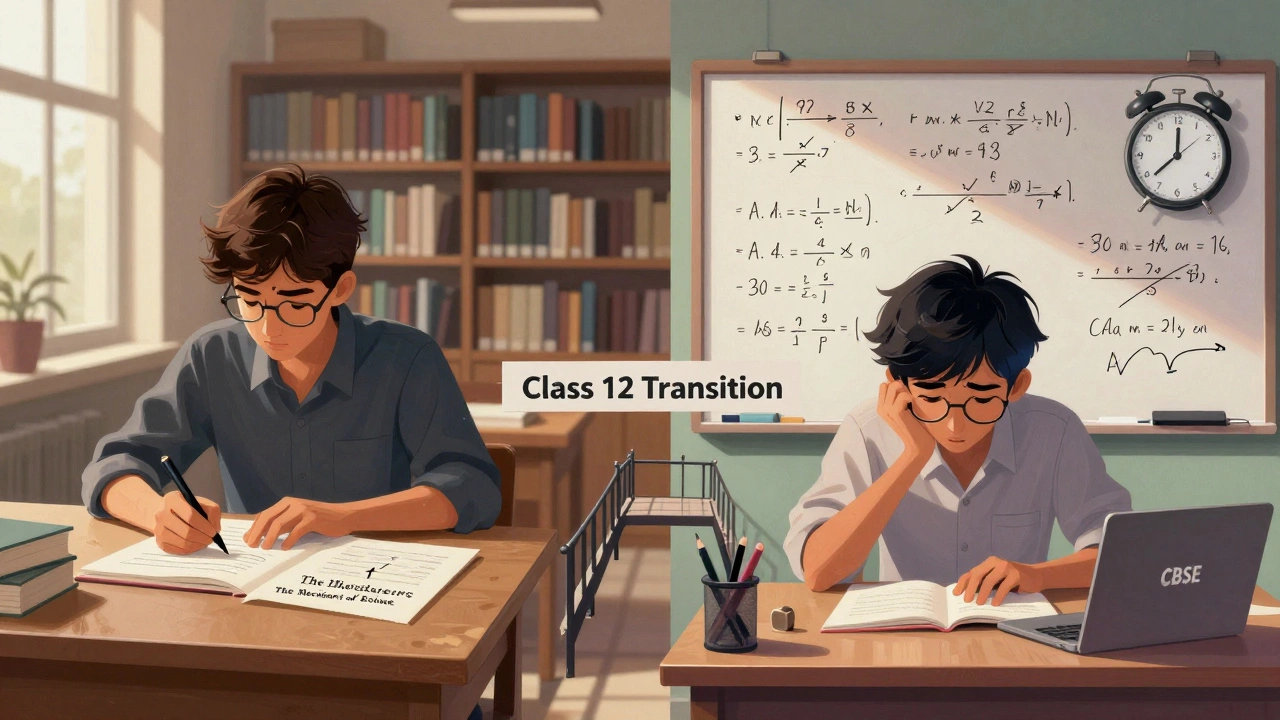
By Class 12, the game changes. CBSE becomes the real battleground. ICSE students often shift to CBSE for Class 11 and 12 because the syllabus aligns better with JEE and NEET. But that doesn’t make CBSE easier-it makes it more intense.
CBSE Class 12 Physics has 10 chapters. Each chapter has 20-30 derivations. You’re expected to memorize them all, plus their applications. In Chemistry, you need to know the exact conditions for 50+ organic reactions. In Math, you’re solving differential equations with multiple variables in under 10 minutes. The exam clock is ticking. The margin for error? Zero.
And the stakes? Higher than ever. A 95% in CBSE Class 12 might get you into IIT. A 90% might get you into a top medical college. But in ICSE, a 90% is considered excellent. The grading curve is different. CBSE doesn’t just test knowledge-it tests endurance.
Grading: The Hidden Battle
ICSE is known for strict grading. A 90% in ICSE is harder to get than a 95% in CBSE. Why? Because ICSE doesn’t inflate marks. If your answer doesn’t match the marking scheme, you get zero-even if your logic is correct. CBSE, on the other hand, is more forgiving. They give step-wise marks. If you write the right formula, even if you mess up the calculation, you get 2 out of 5.
But here’s the twist: CBSE’s leniency is a trap. It makes students think they’re doing well. Then they sit for JEE Main and realize they can’t solve a single problem without a textbook. ICSE students, even if they score lower, often have a deeper conceptual foundation. They can think. CBSE students can calculate. Both are tough-but in different ways.
What Students Really Say
Ask a student who switched from ICSE to CBSE: “Was it easier?” They’ll say, “No. It was just different.” They’ll tell you they miss the essays but are grateful for the clear-cut math. Ask a CBSE student who tried ICSE: “Could you handle it?” They’ll say, “I didn’t sleep for three months.”
Parents in Delhi and Mumbai often enroll their kids in ICSE for Class 6-10, then switch to CBSE for 11-12. Why? Because ICSE builds the mind. CBSE builds the exam machine. Neither is easy. But if you’re looking for the two toughest boards, you’re not looking for the hardest syllabus-you’re looking for the two that demand everything.
Which One Is Truly the Toughest?
There’s no official ranking. But if you ask teachers who’ve taught both, they’ll tell you: ICSE is the toughest for building intellectual depth. CBSE is the toughest for surviving pressure. ICSE makes you think. CBSE makes you perform. One tests your mind. The other tests your stamina.
So which is tougher? It depends on what you’re good at. If you’re a deep thinker, ICSE will break you. If you’re a fast calculator, CBSE will crush you. But if you’re trying to get into the top 1% of Indian education? You’ll have to survive both.
| Feature | ICSE | CBSE |
|---|---|---|
| Number of Subjects | 10+ | 5-6 core + 2-3 electives |
| Exam Format | Long-form, analytical answers | Short answers, numerical problems |
| Grading Strictness | Very strict | Moderately lenient |
| Language Requirement | Advanced English literature | Basic grammar and comprehension |
| Science Practical Weightage | 20-25% | 15-20% |
| Focus | Conceptual understanding | Exam readiness |
What Happens After Class 12?
By Class 12, most ICSE students switch to CBSE-style coaching for JEE or NEET. Why? Because the entrance exams are designed for CBSE’s pattern. ICSE’s depth doesn’t help you solve 40 MCQs in 90 minutes. But ICSE’s foundation? That’s what separates the students who crack JEE from the ones who don’t.
Top IITians often come from ICSE backgrounds. Not because ICSE taught them to solve problems faster-but because they learned to think before they answered. CBSE students win by speed. ICSE students win by insight.
Final Verdict
There’s no single answer to which board is toughest. But if you’re looking for the two that demand the most, they’re ICSE and CBSE. One makes you think harder. The other makes you work faster. Both will test your limits. Neither gives you a break.
If you’re choosing between them, don’t pick the “easier” one. Pick the one that matches how you learn. If you love reading, analyzing, writing-go ICSE. If you love solving, timing, repeating-go CBSE. But don’t expect either to be kind. They’re not schools. They’re training grounds.
Is ICSE harder than CBSE in Class 10?
Yes, ICSE is generally considered harder in Class 10 because of its broader syllabus, stricter grading, and emphasis on analytical writing. Students must study 10+ subjects, write detailed answers, and complete rigorous practicals. CBSE, while still demanding, focuses more on core subjects and exam-oriented problem-solving.
Is CBSE tougher for competitive exams?
Yes, CBSE is better aligned with JEE and NEET, making it feel tougher in Class 12. The syllabus matches the entrance exam pattern exactly-formula-heavy, time-bound, and MCQ-focused. Students who study under CBSE spend years practicing speed and accuracy, which gives them an edge in national exams.
Can I switch from ICSE to CBSE after Class 10?
Yes, many students switch after Class 10 to prepare for JEE or NEET. ICSE builds strong fundamentals, and CBSE provides the exam-specific training needed for competitive tests. Schools and coaching centers commonly accept this transition, and it’s a well-trodden path for top performers.
Which board is better for studying abroad?
ICSE is often preferred for international universities because of its emphasis on English, critical thinking, and comprehensive assessment. CBSE is also accepted, but ICSE’s curriculum more closely resembles the liberal arts and analytical approach valued by institutions in the US, UK, and Canada.
Do ICSE students score lower than CBSE students?
On average, yes-because ICSE grading is stricter and the syllabus is broader. A 90% in ICSE is equivalent to a 95%+ in CBSE. But this doesn’t mean ICSE students are less capable. Many top scorers in national exams come from ICSE backgrounds because they’ve developed deeper understanding, not just memorization skills.

Dhruv Ainsley
I am an education specialist with a focus on international educational systems, particularly in India. I enjoy exploring how educational practices can be improved to foster better learning environments. Writing about such topics allows me to share insights and encourage meaningful discussions. My work seeks to inspire educational reforms that prioritize inclusive and quality learning experiences.